

Click on the article title below to be taken directly to the article. After you’re done reading the article, click “Back to Top” at the bottom to be brought back to the Table of Contents.
Table of Contents
- A Full Aerial Application Agenda in Our Nation’s Capital Area Occurred Last Week as NAAA, NAAREF and Leadership Training for Tomorrow’s Industry Leaders Took Place
- FAA Implements Special Emphasis Enforcement Program for UAS Operations
- FAA’s FAASTeam Webinar on Drone Registration Scheduled for February 24 at 19:00 CST—Registration is Required for Drones Used in Section 44807 Exemptions and Part 137 Operations
- NAAA Leadership Programs Prepare Industry Advocates in Washington, DC
- Your Ag Aviation Industry Needs Your Information – Please Complete the NAAA Industry Survey, Coming to Your In-Box from [email protected]
- AD Proposed for Bell 407 Instrument Panel Electrical Harness Chafing
A Full Aerial Application Agenda in Our Nation’s Capital Area Occurred Last Week as NAAA, NAAREF and Leadership Training for Tomorrow’s Industry Leaders Took Place
Multiple substantive aerial application industry events took place this past week in and surrounding our nation’s capital. This included advocating to federal regulators and legislators the importance of the aerial application industry to agriculture and the importance of sound policy to ensure the industry can continue to conduct its mission. In addition, development of the industry’s future leaders took place via the Syngenta/NAAA Leadership Training Program by augmenting their communication, listening and other skills to serve as spokespersons to public officials and the media advocating the industry’s importance. Moreover, the NAAA and NAAREF Boards met to develop policies designed to ensure the present and future economic well-being of the U.S. aerial application industry.
Legislative and Regulatory Expert Presentations
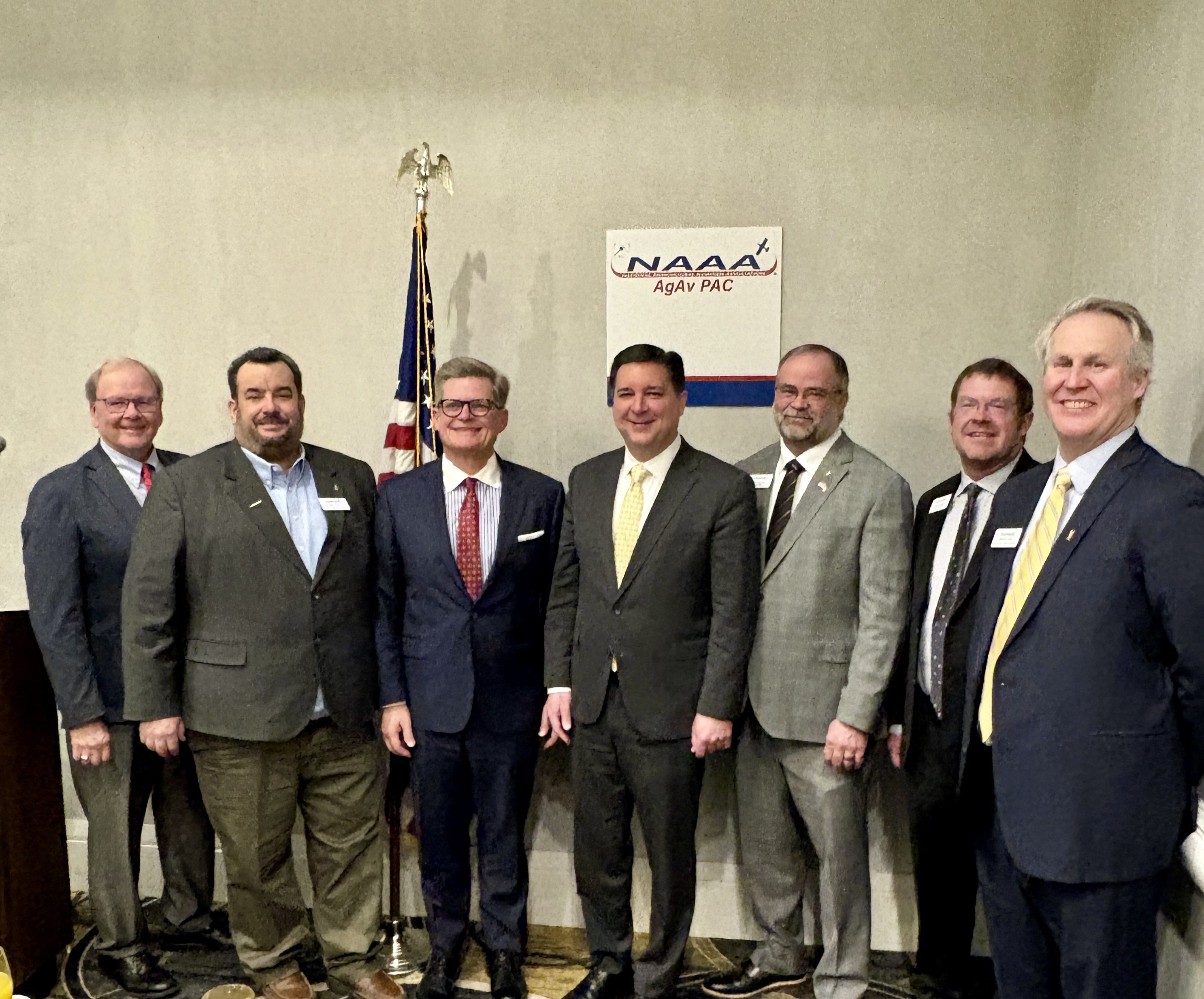
NAAA hosted a breakfast to raise funds for its Agricultural Aviation Political Action Committee (AgAv PAC) with guest speaker U.S. Representative David Rouzer (R-NC). Rouzer is a key member of both the House Agriculture Committee and Transportation & Infrastructure Committee and within Republican leadership. He discussed the differences between the two parties when it comes to Farm Bill content. Several Republicans want to address the growing debt, currently at $37 trillion, by curbing waste, fraud and abuse of entitlement programs such as food subsidies to individuals which are meant to provide temporary, not permanent aide. Democrats don’t want to reduce such entitlements. He also discussed the importance of including regulatory reform in the Farm Bill such as eliminating NPDES permits for applications of pesticides to water when they are already tested for water safety in FIFRA and how such unnecessary regulations can cause death by a thousand cuts to farmers and small business aerial applicators.
Kyle Kunkler, the Trump Administration’s appointee serving as deputy assistant administrator at EPA’s Office of Chemical Safety and Pollution Prevention (OCSPP), addressed the audience of NAAA Board and Committee members. OCSPP has jurisdiction over pesticide registration and use issues at EPA. Kunkler spoke about the backlog of 14,500 pesticide (re)registration and other needed policy actions that faced OCSPP at the time EPA Administrator Zeldin took over the agency in January of last year. Catch up is occurring with that number declining to 9,810. He also discussed how the agency is working to do better with some of its pesticide policies for its stakeholders, such as the agency’s PALM app (Pesticide App for Label Mitigations, which serves as a tool to pesticide users, via a mitigation menu, to reduce pesticide exposure to nontarget species. Kunkler said the agency is always looking to build efficiencies and accuracy as part of its sound science mission and, as such, is interested in NAAA’s efforts to modernize the aerial atmospheric drift model—AGDISP—with EPA oversight.
State of the Industry and Association Report
Andrew Moore, NAAA’s CEO, then presented an industry and association status report starting with current economic conditions in the U.S. that show U.S. net farm income is projected to fall in 2026 to $139 billion, down from $180 billion in 2025. This downturn is driven by weak crop prices—specifically corn and soybeans—and persistently high input costs; also, due to the continued marked downturn in agricultural trade. Moore showed that in 2022, agricultural exports totaled 196 billion, resulting in a nearly $2 billion surplus. Unfortunately, this reversed with deficits every year since growing to $43.7 billion last year, with $175.6 billion in ag exports. This year’s projected ag trade deficit is expected to shrink by $10.8% to $37 billion. Even though current projections aren’t stellar there are existing variables that could improve the U.S. ag economy this year, such as potential trade deals and a pending Supreme Court decision on the legality of the Trump Administration’s use of tariffs under the International Emergency Economic Powers Act of 1977. Also, a decision on year-round E15 ethanol allowance could be made, in addition to rate cuts by the Federal Reserve that would lower farmers’ borrowing costs and the two chambers of Congress could agree on a Farm Bill that could provide enhancements to farm payments.
Advocating Ag Aviation Policy
Moore then discussed policy issues focusing initially on NAAA’s recent meeting with FAA Administrator Bryan Bedford and other FAA, general aviation and drone leaders about the agency’s beyond visual line of site (BVLOS) proposal for drones. Moore communicated to the administrator the ag aviation industry’s concerns with dropped ADS-B signals in certain areas such as rolling hills and dense tree cover; the industry’s preference for using an approved electronic conspicuity (EC) detection device in lieu of ADS-B due to its anonymity and affordability; and the real danger with shielded area language that allows drones operating within a 50 foot bubble of transmission wires, rights-of-way, obstacles, etc., without equipping with ADS-B/EC or to give right of way to a manned aircraft. After the meeting, FAA reopened the BVLOS rule for comment to hear more about EC devices. NAAA commented and reemphasized its position on EC and concerns with shielded areas and directed aerial application interests to follow suit with their own comments. Also discussed was NAAA’s recent success with finally getting the Federal Motor Carrier Safety Administration to allow states to grant an exemption for Class A CDL drivers from obtaining a hazardous materials endorsement when transporting 1,000 gallons of Jet A or less.
Moore then shifted to pesticide-related issues and the Supreme Court’s decision to hear Bayer’s petition that lawsuits regarding Roundup wrongly awarded billions of dollars in damages to plaintiffs for not carrying a cancer warning, even though EPA concluded it doesn’t pose a risk when used according to its label. Moore also discussed how U.S. Health and Human Services Secretary Kennedy’s Make America Healthy Again (MAHA) supporters are fighting against the Trump Administration’s EPA pesticide policies and have openly opposed the Administration’s efforts to offer legal protections around glyphosate manufacturers. The MAHA coalition has also been fighting against Farm Bill pesticide law preemption provisions that would give the states and the federal government primacy over pesticide law and would allow the tens of thousands of different and separate local jurisdictions throughout the country to develop their own pesticide regulations.
He also emphasized NAAA’s perpetual support of ensuring pesticides are labeled for aerial use without unnecessary and/or burdensome restrictions, such as excessive buffers, etc. Since 2017, NAAA has commented on nearly 300 EPA pesticide reviews. NAAA not only submits its own comments to the agency seeking aerial use language but garners support from grower groups. For example, in its recent attempt to gain EPA approval of over the top (OTT) dicamba on resistant seeds it obtained support from the Farm Bureau whose comments to the EPA stated that they support, “aerial application of agricultural chemicals as a safe and effective tool for farmers…urge EPA to recognize that manned aerial application is an important method for applying pesticides because it permits large areas to be covered rapidly…[and that] aerial application of OTT dicamba would be extremely beneficial for farmers to use.” Unfortunately, aerial remains off the OTT dicamba label, however, such support does send a message to the agency to be mindful of aerial application’s importance on future pesticide-related issues.
Updating the atmospheric drift model AGDISP is another method NAAA is pursuing to help register products for aerial use. The modern recoding of the model will allow for new drift reduction technologies and techniques to be incorporated and provide applicators with more label flexibility. Over 85% of the $600,000 needed has been raised or pledged for the model recoding to be completed, and 71% of that raised is from outside of NAAA and NAAREF.
Moore then brought up the aerial application industry/pesticide use survey that is currently underway being conducted by Kynetec. Survey data from NAAA’s industry surveys have been used throughout the years to counter overestimates of pesticide use risk made by EPA, resulting in (re)registering products for aerial use. Surveys have been emailed to crewed, uncrewed and hybrid ag aviators throughout the industry using FAA 137 operations information. Phone calls and mailings will be sent out to ag aviators in which NAAA does not have emails. To date, 109 operators have completed the survey or 7.1% of operators. Moore urged completion of the survey and its invaluable nature to help in ensuring aerial use language for pesticides.
Communications
Moore shifted gears to communications, education and safety issues. He stated that the lion’s share of the communications budget has been devoted to completing the industry pesticide use survey, however, once that is complete, a number of public relations issues are being contemplated including aerial application display at the USDA’s People’s Garden, just adjacent to the National Mall that receives between 25 to 33 million people every year. Continued advertising in major agricultural magazines, eNewsletters and via programmatic marketing on websites are also being contemplated.
Education & Safety
Moore discussed the new requirements for 2026 for the professional aerial application certification program, C-PAASS, which, in addition to requirements for state/regional and national membership, also includes participating in the most recent three years of PAASS. Also required is Operation S.A.F.E. participation over the past two years, or, as an alternative means of compliance, completion of the Impact of Each Droplet Part 1 and Part 2 on the NAAA Education Center; the wires course; and completing the Avoiding Inadvertent Instrument Meteorologic Conditions (AIIMC) module on the Education Center or the Operational Security Course if the AIIMC has already been completed. Work is underway to update the 2027 C-PAASS requirements to include turbine and other flight training as an alternative means of compliance for the human factors requirements. Moore also stated that an agricultural aviation insurance underwriter has provided a discount for an operation because both ag pilots have been C-PAASS certified for multiple years.
Moore also highlighted the success of NAAA’s education and safety programs, such as PAASS, by discussing reduced accident statistics of which there were 43 accidents in 2025, the lowest on record. Sadly, four of those accidents were fatal, tying 2012 with the lowest number of fatal accidents on record. The FAA also recently released its General Aviation (GA) Activity Survey of data collected by U.S. GA pilots nationwide in 2024. The information includes hours flown in the agricultural aviation industry, which totaled 949,149 hours resulting in 5.69 accidents per 100,000 ag aviation hours flown and 1.37 fatal accidents per 100,000 ag aviation hours flown in 2024. The average number of hours flown between 1993-1998, before PAASS’s aviation safety and environmental professionalism curriculum became available to the industry was 1,459,000 with an average of 138.7 accidents per year, 13.3 fatal, with an average accident rate of 9.64 accidents per 100,000 hours flown. The fatal accident rate for the industry between 1999-2024 decreased 27.9% when compared to 1993-1998. Drift claims have decreased by nearly 26 percent since PAASS hit the stage. NAAA’s 2019 industry survey estimates the number of manned agricultural aviation operations in the U.S. is approximately 1,560 and 2,028 manned U.S. non-operator pilots. 1,293 manned pilots and operators took the PAASS program during the 2024-2025 season (before the 2025 aerial application season), or 36% of the agricultural aviation industry.
Convention
Moore discussed the upcoming convention scheduled in November in Savannah, Georgia—always a popular location for attendees. The wire avoidance course will be held on Sunday, November 15. The “Turning an Ag Plane Safely” course that was such a success in Reno will return in Savannah, this time being taught during the general session on Tuesday, November 17th. The Kickoff Breakfast will feature pilot and former reporter for NBC, Amelia Rose Earhart, who successfully flew her namesake’s (Amelia Mary Earhart) worldwide route in 2014. She was the second youngest woman to fly around the world. Her presentation was well received by NAAA operator members that heard it at Pilatus’ aircraft convention, and she is an inspiration to young pilots.
Moore also touched on the Reno convention and although the content was excellent and those that attended enjoyed it, the number of attendees was lower reaching 1,001, compared to 1,327 the last time the Ag Aviation Expo was held in Reno in 2018. The government shutdown and air traffic control issues coupled with the challenging economic environment and lower attendance typically received when conventions are held in the West were all variables contributing to lower attendance. Moore still emphasized, however, finding solutions to address attendance and the investment of the exhibitors and the sponsors. One solution already is reducing the event by one day for this year. The Reno convention was, however, a record in net income for the association, bringing in $1,015,686, due to typically lower costs in Reno and a record price for the PT6A-34 engine generously donated by Pratt & Whitney Canada
Membership and Finances
Reiterating the challenges facing the agricultural economy, Moore stated that NAAA membership has also been affected. NAAA ended 2025 with 1,530 members (463 operators and 434 pilots) compared with 1,847 members (530 operators and 592 pilots) in 2024. According to NAAA’s year-end survey in 2025, the average number of acres treated per operation was 129,031 acres, compared to 141,084 in 2024—a decline of 8.5%. Starting 2026 through January, NAAA has 817 members (274 operators and 233 pilots) compared to 1,183 members (408 operators and 342 pilots) through January in 2025. With that said, unique services that only NAAA members are eligible for are becoming more attractive, such as the health and life insurance available through Decisely, which has quintupled in participation since last year with leads tripling those currently in the program. Also, as stated earlier, C-PAASS has now seen an insurance underwriter reduce rates due to an NAAA operator’s two pilots participating in the program for multiple years.
Moore also brought forth a proposed budget amount for NAAA’s 2026-2027 fiscal year that the treasurers, president and staff helped develop. Being conservative and underestimating revenues and overestimating expenses, the draft budget projects a $206,069 deficit—the budget includes $45,000 in depreciation and $70,000 in credit card processing fees and light revenues for convention and membership, which both could turn around.
Forecasting
Moore concluded by showing a recent survey in CropLife magazine that polled ag retailers and cooperatives throughout the country during the last two months of 2025 about crop protection segments they saw doing better in 2026. A sign of optimism was that 53% of those polled felt fungicide application growth could increase between 1-11% due to tar spot and crown rot expanding its geographic reach. In addition, 46% of those polled felt herbicide application growth could increase between 1-11% due to palmer amaranth and waterhemp becoming harder to control.
Moore concluded by stating that a majority of those polled didn’t foresee growth in certain new ag-tech services such as smart spraying systems, imagery, artificial intelligence, etc., however 50% foresee growth in drones with the other half seeing drone use staying steady.
The NAAA and NAAREF Committees were then directed by NAAA 2026 NAAA President Matt Woolard to then proceeded with their business over the next two days.
NAAA and NAAREF Committee and Board Meeting Highlights
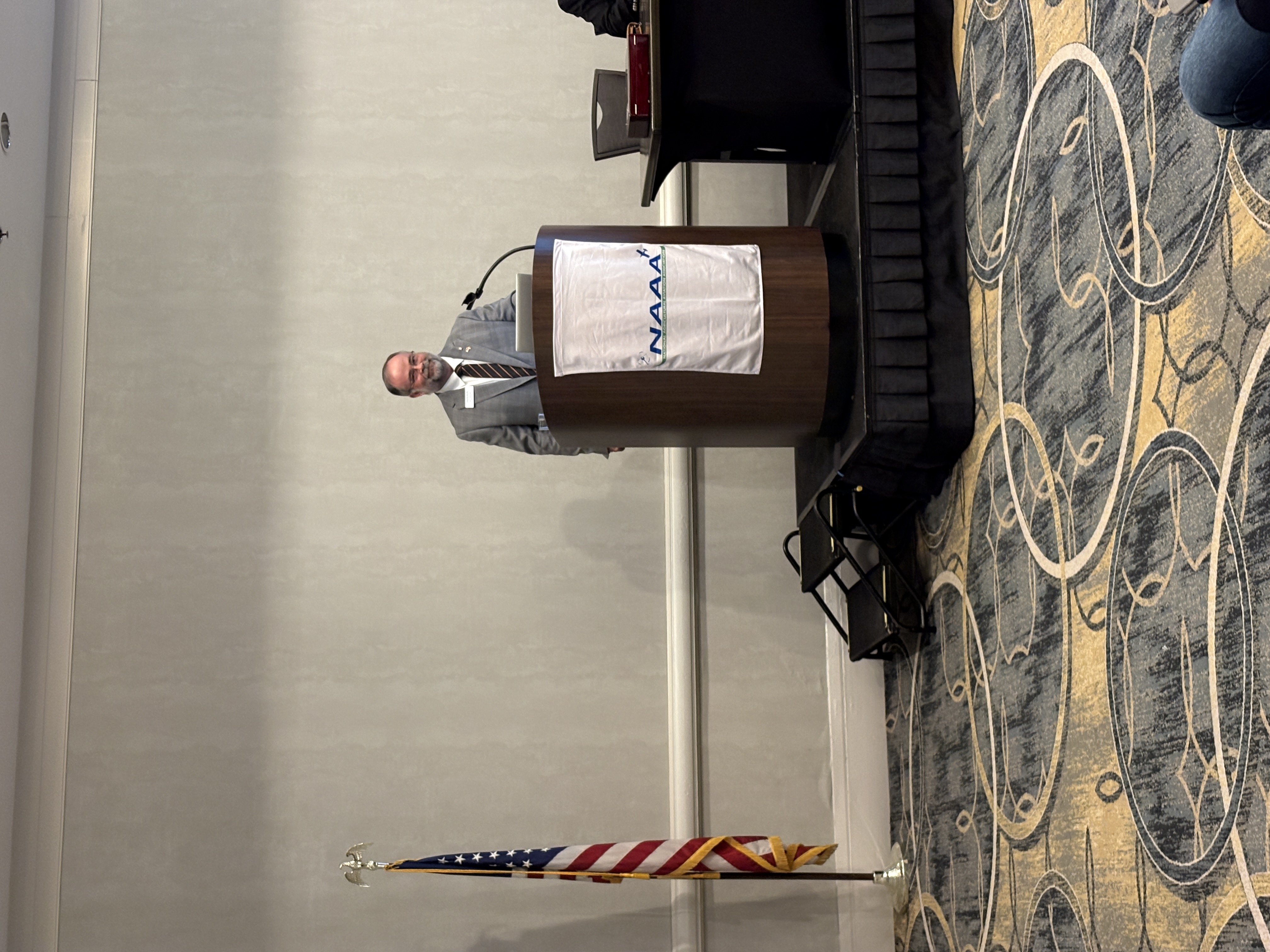
2026 NAAA President Woolard reconvened the NAAA Board for its committee reports and motions. The highlights are as follows:
Allied Industry & Convention Committee: Bob Bailey (NM), committee chairman, delivered the committee report summarizing from the post-convention survey comments that Reno has grown and is nicer than in previous years, and great comments received about the Atlantis hotel, their room upgrades, and the ease of walking to the convention center. NAAA also conducted a survey asking people that did not attend the convention, why they did not (it is not known from this population if they normally attend the convention). The top reasons that people did not attend in Reno were scheduling conflicts, or workload challenges (36%), others had issues traveling to Reno, or they didn’t want to visit the city (21%).
Some allied exhibitors and sponsors were unhappy with the low attendance in Reno. After discussion, and to help spread out the number of years before returning to Reno, it was determined that, if the penalty is not severe, moving the convention back a couple of years should be attempted and a motion, approved by the board, was made to that effect. Reno appears willing to renegotiate the contract for 2030. Savannah is available from December 2-7, 2028. Fort Worth will not be available during the 2028 timeframe due to construction at their convention hall.
Awards Committee: JT Helms (Appointed), committee chairman, requested that all members of the board, committees and membership think about those in the industry that have gone above and beyond the call of duty and to submit a nomination(s) for them to be awarded. The form is available online here, and the deadline for nominations is August 5, 2026. Award winners will be recognized at the Excellence in the Ag Aviation banquet on Wednesday, Nov. 18, in Savannah.
Budget & Finance Committee: Sue Stewart, immediate past treasurer, presented the association’s finances and budget status informing that total assets equal $5.8 million, an increase of $178,000 from last year. This is due to having a bit more cash on hand, thanks to the great profit from the Reno convention, particularly the auction and the generous engine donation from Pratt & Whitney Canada. In addition, total expenses are down $72,000 from this time last year, thanks in part to Reno being less expensive than Forth Worth as a convention location. With 58% of the fiscal year complete and most revenue raised, as of January 31, net income was $670,000, nearly $45,000 more than this time last year, however, that figure will significantly decrease with NAAA funding AGDISP at $100,000 and regular expenses being incurred without generating convention income from booth sales until later in mid-summer.
Stewart detailed the projected budget for NAAA for fiscal year 2026-2027. Due to overestimating expenses and underestimating revenues based on last year’s drop in membership and convention attendance and also significant credit card processing fees, the projected deficit is $206,069. The board approved the budget.
Communications & Public Relations Committee: Landunn Koyle (ID), committee chairman, informed the Board that our current magazine publishing and advertising sales contract ends at the end of the year, and staff will be sending a magazine publishing RFP to four publishing houses. The committee discussed, motioned to the Board and the Board approved to end the NAAA print membership directory after the upcoming 2026 version is completed. In the meantime, staff will continue to grow the NAAA 365 app and website over the next couple of years to supplant that information and ease the search for such information. In Reno, the app was used by 274 users, which was 27% of the attendees. The app was opened 3,622 times.
In addition, staff will update the Flying for Your Food Brochure that summarizes the importance of the aerial application industry, and the committee discussed different topics for the brochure update. NAAA will also ensure that members are aware that brochures are available for school days, ag shows, etc., and post the brochure on the website for download and printing.
The committee also discussed several external communications ideas, such as sponsoring the USDA People’s Garden, located adjacent to the National Mall in Washington, DC. One idea floated was to have a plaque or an ag aircraft weathervane with basic facts, and a QR code to the website for visitors to learn more about the industry’s importance.
Governing Documents and Long-Range Planning Committee: Matt Hovdenes (Appointed), committee chairman, presented that the committee is working to revise the NAAA Strategic Plan, providing a trajectory and inspiration of where to lead the association and industry into the future. It will likely be brought to the Board for full approval at the fall meeting. In addition, the Committee considered input from the Nominating Committee to amend the NAAA Bylaws to waive the requirement to be an operator member to become an NAAA president. This was based on the thought that there are good candidates devoted to the industry who aren’t operators who could make a good president. As such, the Committee approved a motion to the Board that was also approved to add the following language in red to the Bylaws:
- Article V – OFFICERS
- Section 3. President.
The requirement that the president be the designated voting member of any operator company member may be waived only by unanimous vote of the Nominating Committee through the process outlined in Article VI, Section 4 of the Bylaws. The requirement that the president has served as a member of the Board of Directors shall remain.
AND
- Article VI – COMMITTEES
- Section 4. Nominating Committee.
The Nominating Committee may waive the requirement that the president be the designated voting member of any operator company member in Article V, Section 3, by unanimous vote. The requirement that the president has served as a member of the Board of Directors shall remain. This waiver applies only to committee nominees and does not apply to floor nominations. Any committee waiver must be noted in the Committee’s report to the Board.
This will now go to the full membership for a vote. Members will be emailed for an electronic vote at a future date.
Government Relations Committee: Damon Reabe (Appointed), committee chairman, reported that the committee discussed the AGDISP Modernization Project and the funding of the project. Brad Fritz of the USDA-ARS Aerial Application Technology (AAT) Unit reported on a recent meeting he and Harold Thistle, formerly with the U.S. Forest Service, had with EPA regarding the project and that EPA was excited about the possibilities with the updated model and was receptive to the new model. Fritz also discussed AAT projects, mentioning that there is more funding due to several early staff retirements. A couple of larger studies are currently in the works. One will consist of field efficacy studies for applications using larger droplets, potentially encompassing multiple application platforms. Another will be on ag economics specific to aerial application, expanding upon previous work to quantify the value of the aerial application industry.
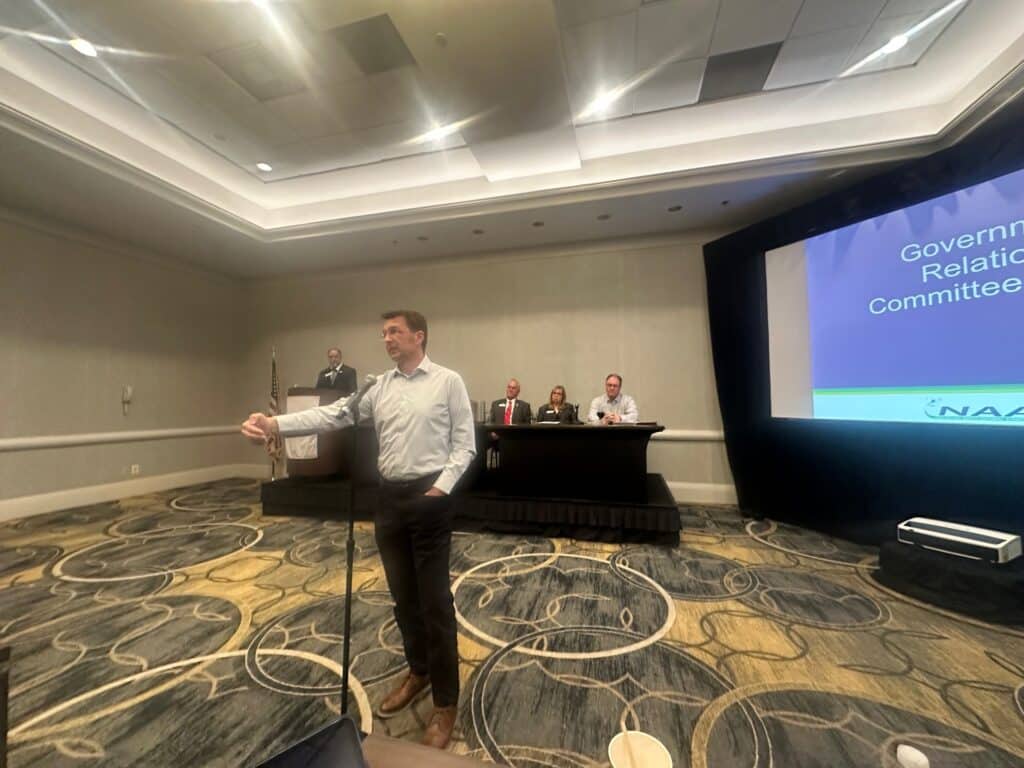
The Committee also heard about an aerial application case involving a misapplication of a fungicide on potatoes, caused by an improper rate recommendation by a licensed pest control advisor in Idaho. While the applicator is ultimately responsible under FIFRA and label language, there was discussion about the implications of future events like this for the industry and whether other stakeholders in the application chain should share some portion of legal responsibility. While the applicator should retain full responsibility for tactical compliance with the label, shifting some crop-specific rate responsibilities made up the chain might need to be considered.
It was also discussed that legislation requiring the marking and logging of slacklines is being pursued from the family of those killed when their helicopter crashed as a result of colliding with such a slackline crossing a canyon.
Membership Committee: Tim Swanson (NAAA Treasurer), committee chairman, spoke impassioned words on a method to obtain and retain members by remembering why they joined—and it was usually because they were asked by a peer or employer. As such he pleaded to the committee and board members to leverage their personal relationships to invite non-members and non-renewals to join and to always thank existing members to encourage renewal. It was classified as his “Membership Made Personal” campaign.
A motion was also brought out of committee to the board that NAAA should take a neutral stance on drones in the industry. There was fervent debate about the motion ranging from a history of companies and industries that do not advance technologically are no longer around, and that the industry needs to adapt. It was also brought forward that many manned aircraft operators and pilots struggle with drone operators who don’t do it right; it was also underscored that the association’s own governing documents charge NAAA to advance the aerial application industry and its members, including educating and advocating the aerial application industry and the motion conflicts with those governing documents. Ultimately the vote was not approved.
Museum Committee: Glenn Holloway (MS), committee chairman, stated that, due to Pratt & Whitney Canada’s continued generosity to the industry, they will donate a timed-out PT6A-140 engine to the National Agricultural Aviation Museum and Hall of Fame in Jackson, Mississippi. He also mentioned that due to the success of the 2025 NAAA Board meeting this past fall, the Museum Hall of Fame Foundation Board would like to host a celebration for the NAAA every five years as part of its Board meeting.
Precision Agriculture Committee: Gentry Smith (AL), committee chairman, reported that the AGDISP Modernization Project (AMP) was provided an update from Stephen Foster, who heads the project. AGDISP is the fundamental model that details how droplets move in wind and aircraft vortices. The first year was about deconstructing the old model. Now in year two, it is about implementing the coding in C++ an updated computing code. Following that, year three is to add front-end and analysis tools and documentation. The team will create a report for EPA so they can verify the model works and approve its usage. Steve Foster is currently working on an advertisement for coders to hire to finish the model. The project is still on track to finish at the end of 2026. Once the update is done, it can be used for better testing the effectiveness of drift reduction technologies and techniques, site-specific risk assessments and real-time application predicting.
It was also discussed that an application programming interface is being designed for EPA’s BLT to bring buffers, application details, field boundaries, baseline runoff requirements, etc., into Chem-Man. The committee directed staff to contact software application vendor companies to ensure they are aware of the driving regulations and the availability of the APA and its designer’s availability to assist.
It was also reported that a fly-in is scheduled to collect pattern and droplet size data comparing CP, Craft and AFS nozzles on AFS booms.
Safety & Federal Aviation Regulations Committee: Tom May (Appointed), committee chairman, reported that the committee discussed a need for educational programs, such as PAASS, to explaining the right-of-way rules between crewed and uncrewed aircraft along with the UAAS Committee’s resolution pertaining to drone providing right-of-way and manned aircraft surveilling at altitude before applying would be good for both crewed/uncrewed pilots due to the number of UAAS folks at PAASS.
It was also stated that the Tylor Johnson Foundation has a guy wire marking initiative underway for growers, utility companies, etc., to mark wires. If an applicator sees an unmarked guy wire, they can take a photo of it and submit it with a GPS location. It is then routed to the appropriate municipal and co-op energy authorities to have a sleeve installed on that wire.
The committee also discussed drug testing, and staff will work on guidance highlighting the issue of drugs in accidents and provide information on available drug testing resources.
Support Committee: Tiffany Rivenbark (Support), committee chairwoman, stated that the Athena program, designed to share office operation efficiencies at ag aviation operations, was presented at eleven state/regional conventions and at the Ag Aviation Expo in Reno. For Savannah, Support potential activities will include visiting a prohibition museum, including a mixology class. Rivenbark also announced that the 2026 scholarship topic will be to identify a person who has made a meaningful contribution to the agricultural aviation industry. In what ways has their work and character influenced your goals or perspective.
UAAS Committee: Sean Newcomb (Northeast), committee chairman, reported that the Committee approved the UAAS drone customer and drone applicator flyers that provide details on drone application operational, insurance and licensing requirements. The American Spray Drone Coalition stated that they will work with its members to distribute the flyers to drone buyers. The customer flyer will be provided to retailer and grower associations, USDA extension and state lead ag agencies, amongst others, to distribute.
uAvionix, a manufacturer of electronic conspicuity (EC) devices that provides awareness of nearby aircraft, gave an update on EC. The company believes the FAA will approve EC. The technology is attractive because, although it notifies the location of a nearby aircraft, N-number and other information about the aircraft is anonymous.
The committee discussed FCC prohibition on new models of foreign drones. It was stated that DJI was hit hard by this. It is believed that this will lead to more U.S.-manufactured drones. U.S.-made drones rose from 4-5% to 20% from 2024 to 2025. In 2024, 9,000 UAAS drones were sold in the U.S. In 2025, that was down to 3,700 drones sold. This is apparently not a reflection of demand, but a drone supply issue. It was stated that only about 14% of drones are complying with getting certified. The FAA is aware of compliance issues (see related eNews story below), and they are starting to take enforcement actions.
The committee also discussed needs for the UAAS community, including spray pattern testing, attending PAASS with manned aircraft operators, etc. An ad hoc committee was formed to discuss these topics.
NAAREF: President Rod Thomas stated that the 2025-2026 PAASS attendance is down 7% compared to the prior 3-year average and there is a -10% decline in attendance from the prior 5-year average. In terms of polling, the average rating for program content this season to-date is 4.27 with 5 being the highest rating. This represents a -4% change to the prior 5-year average rating. The content this season is more technical relative to other recent programs.
Topics for the 2026-2027 PAASS program include crew resource management, winglets, drift incident breakdown, and fatigue.
The Operation S.A.F.E. Committee recommended NAAREF create three categories for Operation S.A.F.E. analysts based on aircraft type: fixed-wing, single-rotor, and multi-rotor. Existing Operation S.A.F.E. analysts will be grandfathered in all the analyst categories, and they can string test any aircraft. The exception would be a recent class of drone-only technicians who will be given analyst status for multi-rotor aircraft only.
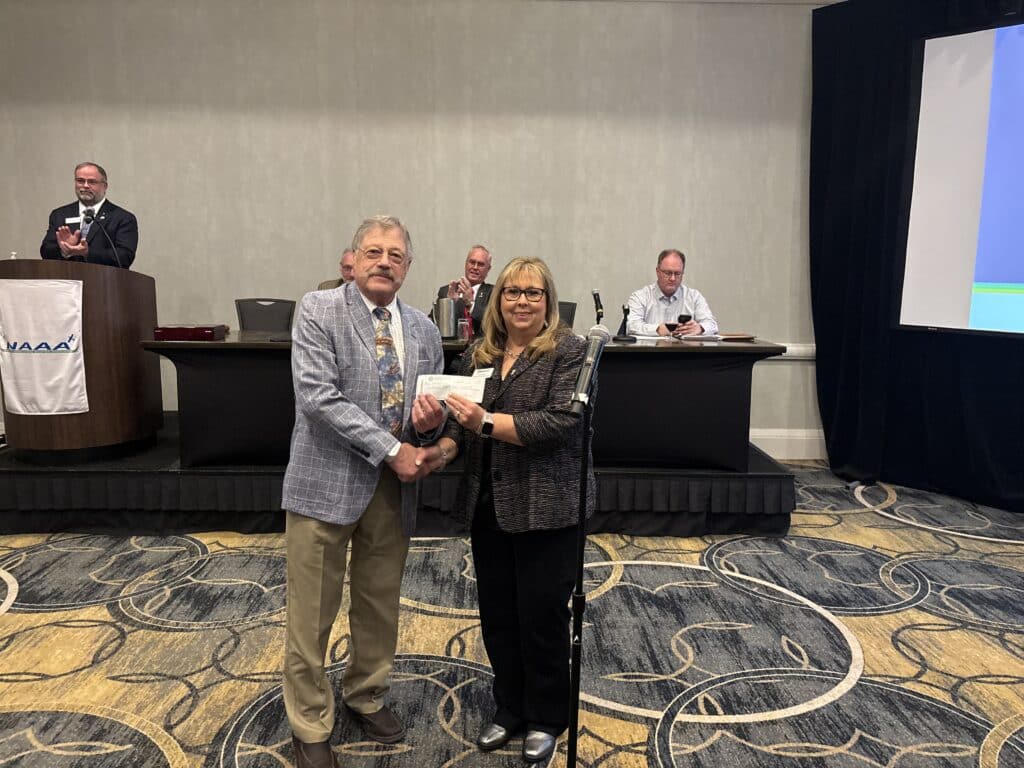
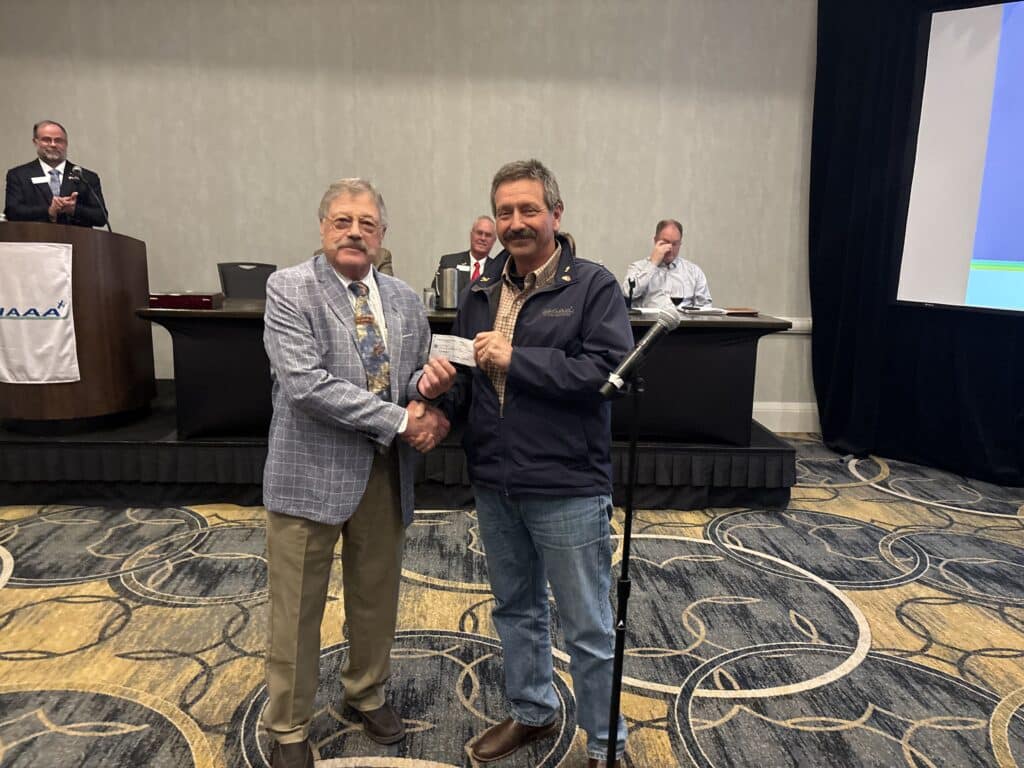
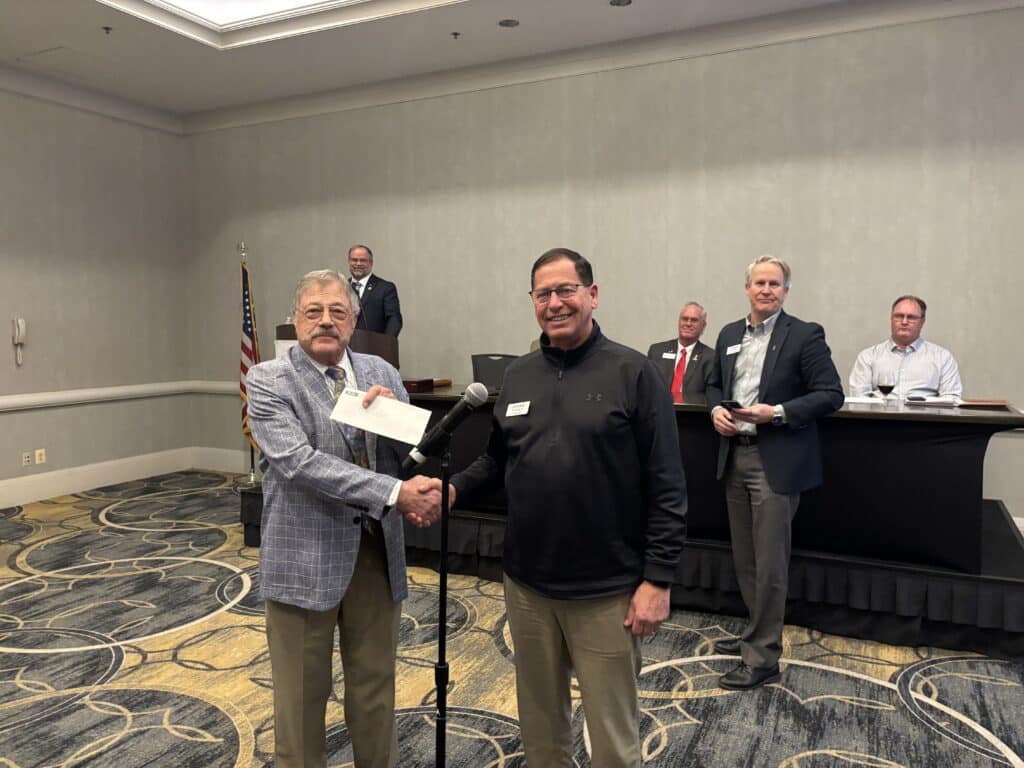
State and Regional Reports: Generous donations of $5,000 were each made to NAAREF from Illinois, Kansas and New Mexico Agricultural Aviation Associations.
NAAA thanks all the volunteers that put in not just multiple hours, but multiple days and sometimes weeks of advocacy and advancement to the NAAA, NAAREF Boards and the aerial application industry. It is the lifeblood for the organizations and just what the doctor ordered for the aerial application industry.
FAA Implements Special Emphasis Enforcement Program for UAS Operations
On January 21, 2026, FAA updated its Compliance and Enforcement (C&E) Program in FAA Order 2150.3C with Change 13 to provide for a special emphasis enforcement program applicable to UAS operations that endanger the public, violate airspace restrictions, or further a crime. This new policy affects all agency personnel who investigate, report or process statutory or regulatory violations involving UAS.
Specifically, this change establishes new policy with C&E Bulletin 2026-1 which supersedes the previous policy in C&E Bulletin 2021-2.
The previous policy was applicable only to holders of a remote pilot certificate who engaged in conduct in violation of Part 107 that demonstrated a lack of care, judgement or responsibility. For these cases only, it made it FAA policy to proceed with both remedial legal enforcement action (revocation of the remote pilot certificate and any other airman certificates) and punitive legal enforcement action (civil penalties).
The new policy broadens the scope of when the FAA will take both remedial and punitive enforcement action, including expanding applicability to all UAS operations (not just those under Part 107). It also implements Section 6 of the 2025 Restoring American Airspace Sovereignty Executive Order by requiring legal enforcement action (not simply compliance or administrative action) when a UAS operation endangers the public, violates established airspace restrictions, or furthers another crime.
The new policy states “in connection with its regulation of small UAS, the FAA has observed a proliferation of regulatory and statutory violations evidencing a lack of qualifications because of a lack of care, judgement, or responsibility. This bulletin announces FAA sanction guidance to more effectively address such violations by remote pilot certificate holders.”
While this policy change may be viewed as simply bureaucracy at work with FAA incorporating an Executive Order into its policy, it is also the first official change to C&E policy for UAS in 5 years. The firm language in the policy leaves a foothold for hope that the administration is beginning to take this issue with the level of seriousness it deserves.
FAA’s FAASTeam Webinar on Drone Registration Scheduled for February 24 at 19:00 CST—Registration is Required for Drones Used in Section 44807 Exemptions and Part 137 Operations
On February 24, 2026, at 8:00 p.m. ET / 7:00 p.m. CT, the FAA Safety Team (FAASTeam) will present a drone webinar on drone registration. FAA registration is required for all drones used in Section 44807 exemptions and Part 137 operations. The FAA FAASTeam will be bringing in an expert in aircraft registrations to help operators ensure compliance ahead of the 2026 spray season for a webinar scheduled for February 24th at 7:00 PM CST. For more details and to register, click here.
All past FAAST drone safety webinars are housed here.
NAAA Leadership Programs Prepare Industry Advocates in Washington, DC
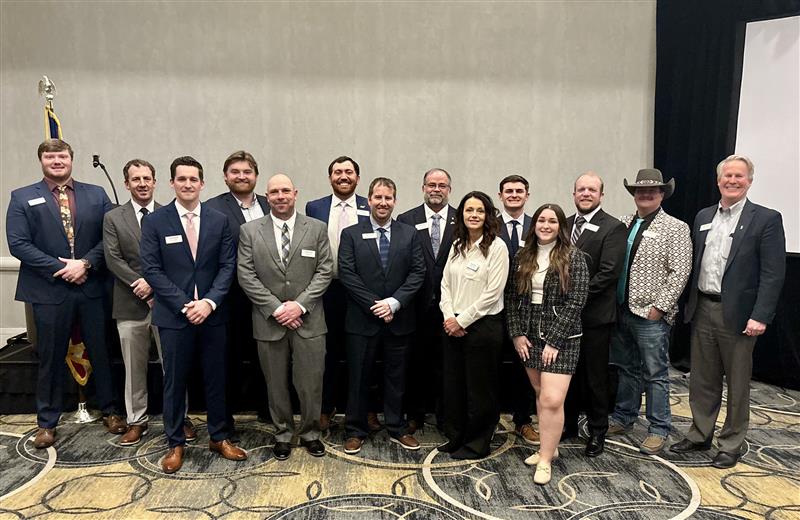
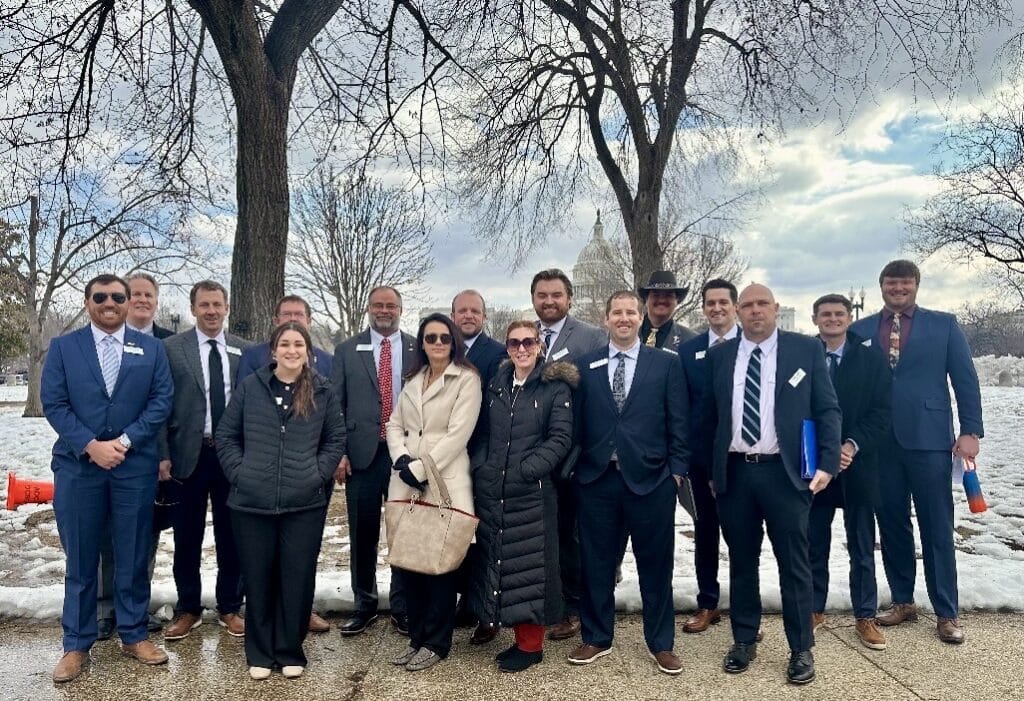
The NAAA/Syngenta Leadership Training Program (LTP) and its sibling program, Leadership At Its Best (LAIB), have been shaping strong leaders in agricultural aviation since 1995. An intensive five-day course was held recently in the Washington, DC area, equipping participants with the skills to effectively communicate the positive role aerial application plays in agriculture to the public, media, and government officials.
This year’s LAIB participants were Thomas Wolf (LA) and Matthew AufderHeide (AR). The twelve LTP participants included Emilio Carvalho (CA), Zach Edwards (MS), Clifford Lakey (NE), Walter Meise (WA), Lilly Paxton (SD), Doug Pralle (IA), Markus Seitter (Manitoba, Canada), Matthew Stevens (MI), Amanda Timmer (IA), Kyle Turner (TX), Seth Venable (TX), and Clay Waldrip (TX).
In addition to media training and learning leadership skills, the LTP cohorts spent time on Capitol Hill lobbying on important ag aviation issues, including ensuring government protections for manned aircraft from unmanned aircraft operating beyond visual line of sight (BVLOS); and reforms to pesticide law easing unnecessary legal and bureaucratic burdens of pesticide applicators. Syngenta personnel noted they were highly impressed with the NAAA participants and their potential to shape the future of leadership in aerial application and agriculture. Congratulations to all the participants for stepping forward to lead and ensuring the voices of agricultural aviators are heard in the nation’s capital and beyond.
LTP and LAIB continue to play vital roles in shaping the next generation of agricultural leaders, ensuring that the voices of growers and agribusiness professionals are heard and respected worldwide. More than 400 individuals have completed this program over the past 30 years helping shape the future of agricultural aviation leadership.
Your Ag Aviation Industry Needs Your Information – Please Complete the NAAA Industry Survey, Coming to Your In-Box from [email protected]
The aerial application industry was released a few weeks ago, but we need far more ag operators and pilots to answer the call for data. The participation rate for the last industry in 2018 was over 35% – it’s important that at the very least we match that response rate with this survey. The current survey has 25% fewer questions than the 2018 survey, so NAAA is hoping for an even greater response rate this time.
This survey will be used to document the acres treated by different aircraft types, including airplanes, helicopters, and drones. If you want the public and government officials to know the important role your operation and aircraft plays, you need to complete the survey. Your response can lead to having a greater inventory of pesticides for aerial use and protections from obstacles in the low-altitude environment.
For operators, the survey will ask you to confirm your operation’s Part 137 certificate number. Your certificate number will not be associated in any way with your responses to the survey. Your certificate number is being used to verify that we reach out to every ag aviation operation in the U.S. It also protects the accuracy of the data by preventing outside meddlers from entering false information.
NAAA is aware the survey is not a simple and quick series of questions. The questions asked are based on real data needs for promoting the importance of our industry. Remember that you can save your place and come back to complete the survey – this means that once you start, you’re not committed to finishing the whole survey right then and there.
Currently invitations are being emailed to every Part 137 operation and ag pilot that NAAA has an email address for. If you have not yet received an invitation, first check your email’s spam or junk email folder to make sure your invitation isn’t there. The email will be coming from the email address [email protected]. You may be able to set your email service’s spam filter to allow emails from this address to come through. The email header will look like this:

If you still can’t find your email invitation, click the button below to email NAAA to make sure we have your correct email address.
Thank you in advance for taking this important industry survey.
AD Proposed for Bell 407 Instrument Panel Electrical Harness Chafing
The FAA has proposed to adopt a new airworthiness directive (AD) for certain Bell Textron Canada Limited Model 407 helicopters. This proposed AD was prompted by a determination that chafing can occur at various locations on the electrical harnesses located in the aircraft instrument panel area. This proposed AD would require a one-time detailed visual inspection of the electrical harnesses for chafing and corrective actions if necessary. This proposed AD would also require rotation of the backshell cast housing of connectors of the lower engine airframe unit and installation of a wire harness bracket and support, and for certain helicopters, installation of a wire bundle sleeve.
You can view the Proposed AD here. Comments are due March 20, 2026.
In Case You Missed the Last NAAA eNewsletter
Click here to read the February 12, 2026 eNewsletter:
- Former NAAA Operator Allen Chorman of Delaware Passes at 80
- Dicamba Once Again Approved for Tolerant Crops but Without Aerial Application
- FAA 2024 General Aviation Activity Surveys Released with Hours Flown by Ag and Other Industry Statistics
- Membership Grace Period Ends Sunday—Renew Your NAAA Membership Today
- Ag Aviation Industry Needs Your Information – Please Participate in NAAA Industry Survey, Coming to Your In-Box from [email protected]