

National agricultural aviation association
Education
The key to membership development and retention is to provide programs and services members want. NAAA takes that notion to heart, actively listening to its members to evaluate and improve current offerings and develop new programs in step with the needs of the membership.
The National Agricultural Aviation Research and Education Foundation (NAAREF) is a non-profit organization to promote and foster research, technology transfer and advanced education among aerial applicators, allied industries, government agencies and academic institutions.
NAAREF is an integral partner of NAAA and the driving force behind the industry’s premier educational programming, including many of the programs below.
PAASS
A yearly education program like no other, PAASS is created by and given by ag pilots. Covers key safety and drift mitigation issues important to flying. The conscious decision to educate rather than regulate inspired PAASS, hence the motto: “Upon the performance of each rests the fate of all.”
Operation SAFE
Evaluating the spray/spread pattern of an ag aircraft is critical to ensuring it will apply accurately in the field. Operation SAFE matches applicators with the experts and tools required to quantify characteristics such as uniformity, effective swath width and droplet size.
Compaass Rose
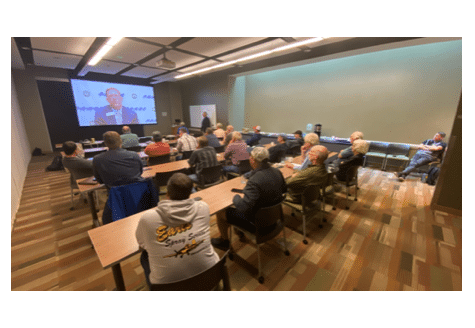
This complimentary program to PAASS, also created and given by ag pilots, is designed to provide professional support and direction for agricultural aviation pilots who are new to the industry and those want to learn more about the industry and what it takes to get into ag aviation.
A pillar of operations under Part 137 is a demonstration of the requisite Knowledge & Skills set forth in 14 CFR §137.19(e). Procedures and topics for the Knowledge & Skills Test are detailed in the Flight Standards Informational Management System (FSMIS) 8900.1, Volume 5, Chapter 11, Section 1 and AC 137. NAAA encourages use of the Agricultural Airman Guidelines (AAG) — a comprehensive resource to assist operators, supervisors, pilots and FAA personnel when preparing for, or administering, this test.
14 CFR §137.41 mandates that anyone operating under Part 137 have documentation of a passed Knowledge & Skills Test for the type of aircraft flown (fixed-wing, rotorcraft). There are two distinct levels for which a test may be given:
- Chief Supervisor: For a Chief Supervisor, a test can only be administered by the FAA, who will provide a logbook endorsement or signed letter of competency acknowledging the test and date passed. A Chief Supervisor can carry this endorsement (from FAA) throughout their career, working for other operators.
- Pilot in Command (PIC): For a PIC, a test can be administered by the FAA, a certificated operator or a Chief Supervisor, who will provide a logbook endorsement or signed letter of competency acknowledging the test and date passed. A PIC can carry this endorsement to another operator, however, that operator may optionally require the PIC to take another test. The operator is responsible for recording the date (for their own records) on which the PIC passed the test, regardless of whether it is by acceptance of a previous test or by administration of a new test.
The Agricultural Airman Guidelines (AAG) are intended primarily to be a resource to assist operators, supervisors, pilots and FAA personnel when preparing for, or administering, a 14 CFR §137.19(e) Knowledge and Skills Test or Endorsement (Letter of Competency). Secondarily, and more generally, they serve as consistent safety education and training guidance for agricultural aviation operators and pilots whether it be for an initial evaluation of their knowledge and skills or a training review.
The NAAA Education Center provides access to on-demand online courses on topics relevant to aerial application. Historical PAASS programs are available for a fee, and a fledgling list of other courses, free to NAAA members, are being continually added to. As this resource grows, it aims to cover all topics outlined in both the Agricultural Airman Guidelines (AAG) and the National Aerial Applicator’s Manual (AAM).
Certified-Professional Aerial Applicator Safety Steward (C-PAASS) is the agricultural aviation industry’s flagship professional certification program. Jointly administered by NAAA and NAAREF, C-PAASS promotes safety and application accuracy.
This annual certification is offered solely to individual ag pilots who would like to demonstrate to customers, regulators and the public their commitment to safety and professionalism.
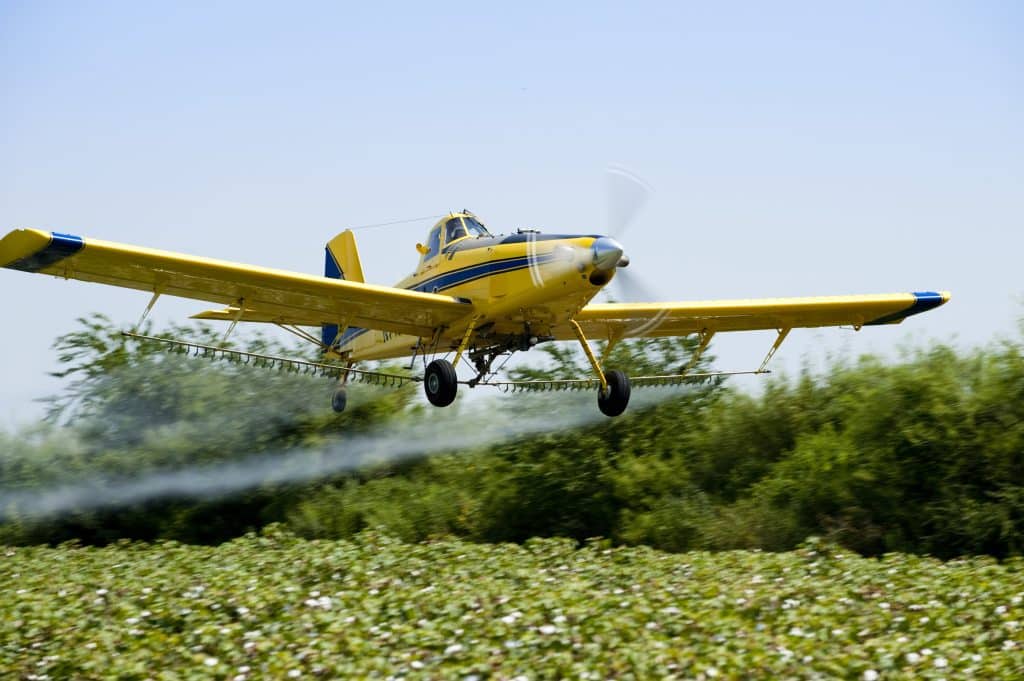
From April to August, NAAREF publishes regular Fly Safe messages specifically targeted to in-season ag pilots. These messages, through email and social media, aim to quickly and frankly convey reminders about specific safety topics. While the season is busiest, Fly Safe communications prompt reflection of what is truly important: pilot safety.
Are you looking for scholarship money for your education, to get started on your journey to becoming an ag pilot, or to further your training as you transition to turbine-powered ag aircraft? If so, NAAA has three different scholarships for you to explore!
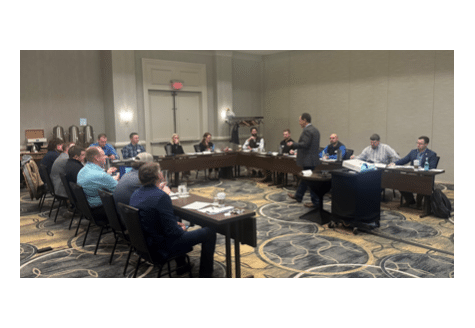
The Syngenta Leadership Training Program – also known by Syngenta as Leadership at Its Best (LAIB) – is annually offered jointly with NAAA over three days of intensive training to teach participants how to effectively communicate with the public, media and government, and use those tools to improve the image of aerial application and serve as strong industry leaders.
To participate, individuals must be nominated by their state/regional ag aviation association and subsequently selected by an NAAA selection committee.
The Athena Project is an annual education program designed to educate and support those who have a connection to agricultural aviation by addressing the real risk management concerns of everyday life in the industry. The program explores topics relating to the culture, connections, and safety of the ag aviation community. The Athena Project is developed annually and presented by the NAAA Support Committee.
Relationship Drift is an educational program that focuses on how personal relationships affect pilot decision-making and overall safety. The intended audience comprises of men and women, couples or singles (i.e., ground or office personnel), who all strive to enhance their current or future relationship to be an asset towards pilot safety in the aerial application industry. The #1 goal is for the pilot to make it home to their family at the end of the day!
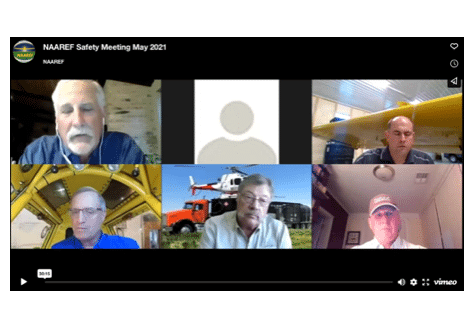
Over the years, NAAA and NAAREF have produced several high-quality educational, safety and training videos to further their goals of providing education to the aerial application industry. The videos were produced for viewing at a particular program or safety session, but the organizations have made them available for on-demand viewing. Some videos are restricted to NAAA members. Click the file icon below or use the search box to browse videos.
NAAA is pleased to recommend the USDA-ARS Aerial Spray Nozzle Models developed by the USDA-ARS Aerial Application Technology Research Unit.
The USDA-ARS Aerial Spray Nozzle Models were developed to provide aerial applicators with a tool for determining the droplet size resulting from an application scenario based on the nozzle used and the operational conditions of the application. They provide a quick and easy interface providing the user with droplet size and classification information based on the nozzle being used as well as the operational conditions of the application (orifice size, spray pressure, orientation angle and airspeed).

There are two tools currently available to interact with these models: a downloadable interactive Excel spreadsheet and a web app. Both tools prompt selection of either “Low Speed” or “High Speed”. Low speed refers to nozzles operating in airspeeds below 120 mph while high speed refers to nozzles operating in airspeeds above 120 mph. This selection determines the appropriate modeling parameters. Not all nozzles are available for both speed ranges, but new data is added from time to time.
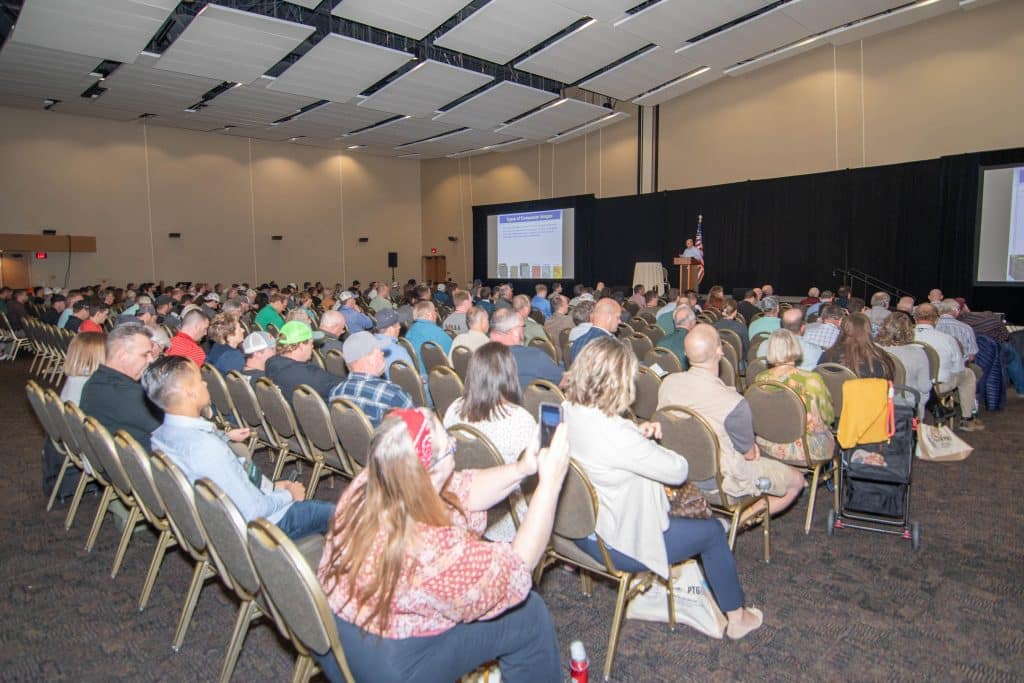
A Staple Of The Annual Ag Aviation Expo Is The Aerial Application Technology Research Session, orchestrated By The USDA-ARS Aerial Application Technology Research Unit Based In College Station, TX. Bringing Together Experts Across The Country, Timely Topics Related To Technology Development, Testing And Field Research Are Presented To Keep Aerial Applicators Abreast Of The Bleeding Edge Of Application Technology. Recordings from recent years allow individuals who missed them to get caught up.
NAAA Professional Operating Guidelines – These operating guidelines are designed to assist our members in establishing a model of operation that will assist in providing superior crop protection services, promote safety among the members and enhance the image of the aerial application industry and its members
NAAA Agricultural Aviation Flight Risk Assessment Tool (FRAT) – A checklist you can employ or adapt to your operation to enhance safety and aid in ensuring you are safe to fly. Organized with short sets of questions meant to be answered based on how frequently you should review them, this tool provides simple yes/no questions for an ag pilot to check annually, monthly, daily and before each flight with a final reminder that no flight, job or customer is worth your life. If you have comments or suggestions on the questions asked on the FRAT, please submit them here.
- FRAT – Keep a Scan Going – A printable safety reminder to accompany the FRAT.
- FRAT – Caution Wire Environment – A printable safety reminder to accompany the FRAT.
Checklist – Ag Pilot / UAS Encounter – If you or a pilot of yours has a near-miss encounter with a UAV or, worse, is hit by one, undoubtedly one of the main things going through your mind after the initial shock subsides is what to do and who to call to report the encounter. NAAA has prepared a handy checklist of steps to take after a UAV encounter.
Checklist – Pilot Subjected to Discharge of a Firearm Targeting an Ag Aircraft – If you or a pilot of yours is shot at while operating an ag aircraft, undoubtedly one of the main things going through your mind after the initial shock subsides is what to do and who to call to report the shooting. NAAA has prepared a checklist on how to respond in the event someone discharges a firearm at your aircraft.
Brochure – Combatting Fatigue in Ag Aviation – The signs and symptoms of fatigue must not be ignored. Fly Safe, Fly Smart, Fly Rested.
Cover Crops – 2017 Expo Presentation – Proper aircraft setup for uniformity, seed species selection for aerial seeding and considerations for successful stands
Agriculture Aviation Resources to Support Outreach and Education
– Ag Aviation Careers
– Ag Aviation Industry Facts
Agricultural Aviation Curriculum Guides
– Elementary Curriculum Guide: Designed for use by classroom teachers or 4-H leaders (grades K–5)
– Secondary Curriculum Guide: Designed for use by classroom teachers or 4-H leaders (grades 6–12)