

Drone Collides with Helicopter in Daytona Beach
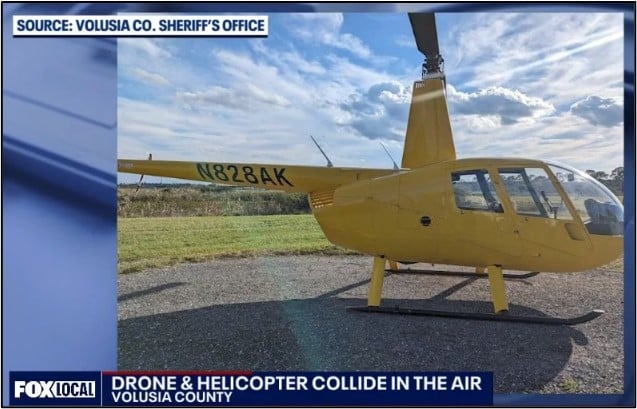
A drone collided with a helicopter that conducts sightseeing tours this past weekend over the Daytona Beach, FL flea market. Although no one was injured, the drone collision caused $60,000 in damage to the helicopter and the incident is under investigation by the Federal Aviation Administration (FAA). The drone operator was reportedly looking down at his computer tablet when the collision occurred.
This incident is another reason why NAAA’s position is that Uncrewed Aerial Systems (UAS’s) operating either within visual line of sight or beyond visual line-of-sight (BVLOS) be required to equip and utilize detect and avoid (DAA) technology which has been FAA-certified as effective at protecting the unique nature of crewed manned aircraft, aerial application operations or otherwise. Just in the past few months, NAAA has submitted comments to the FAA regarding exemption petitions by Wing Aviation LLC and American Aerospace Technologies Incorporated, amongst many others over the years, requiring UAS equip with DAA and give right-of-way to manned aircraft.
NAAA urges adherence to the following UAS safety protocols:
- Crewed aircraft should always have the right-of-way over UAS.
- Commercially utilized UAS should be certified by FAA as airworthy
- Before UAS operate in areas commonly trafficked by crewed aircraft, such as above farms, they should be equipped with ADS-B In to be able to detect crewed aircraft with ADS-B Out. Ultimately, NAAA believes that UAS should be mandatorily equipped with FAA-certified detect and avoid (DAA) technology that detects crewed aircraft (both cooperative and non-cooperative) and alerts UAS to their position so they can give way to them.
- The above DAA technology should be a prerequisite for Beyond Visual Line of Sight (BVLOS) operations.
UAS should be equipped with visible strobe lighting, and ideally painted in readily distinguishable colors, such as aviation orange and white, to increase visibility. - UAS pilots should be held to a standard similar to crewed aviation pilots. This includes requiring a pilot certificate to demonstrate proper knowledge of the NAS, as well as a third-class medical certificate to demonstrate physical capability to operate a UAS.
NAAA will continue to advocate to policymakers the importance of regulating drones to ensure they safely operate amongst manned aircraft and the public.