

NAAA and NAAREF Boards Meet in Ag Aviation’s Epicenter—the Mississippi Delta—to Honor the Industry’s Fallen and Conduct Business for the Industry’s Future
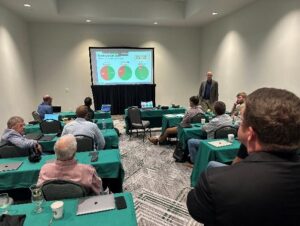
The National Agricultural Aviation Association (NAAA) and National Agricultural Aviation Research and Education Foundation’s (NAAREF) boards and committees met last week in the ag aviation industry’s commercial beginnings—the Mississippi Delta—to conduct important business and also to honor the newly completed Last Pass Memorial Walkway—a tribute to those who lost their lives while conducting aerial application flights—at the Mississippi Agriculture & Forestry Museum in Jackson, Mississippi.
In addition to the two organizations’ board meetings, presenter training occurred for the 2025-2026 PAASS program curriculum. The new, original PAASS curriculum on weight and balance of an aircraft, nozzle maintenance and a number of other safety and environmental professionalism topics will be coming soon to a state/regional agricultural aviation annual meeting near you. See the NAAA calendar here.
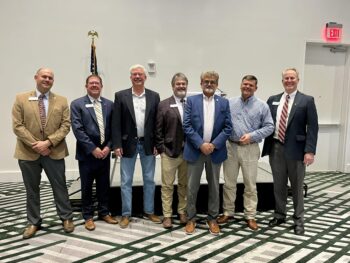
Before the meetings began in earnest on Friday, October 10th, NAAA held a fundraising breakfast for its political action committee—AgAv PAC—to raise needed funds to support candidates supportive of the agricultural aviation industry running for federal offices. U.S. Senator Cindy Hyde-Smith (R-MS)—a long-time supporter of the agricultural aviation industry that has advocated for aerial application technology research at the USDA—was the intended keynote PAC breakfast speaker but due to the federal government shutdown she was unable to make it but send a warm video greeting and was represented by Umesh Sanjanwala, her state director.

The NAAA board meeting general session commenced after the PAC breakfast with 2025 President Mike Rivenbark welcoming all board and committee members and guests. He then asked Andrew Moore, NAAA’s CEO to the stage to deliver his report on the state of the industry/association.
NAAA State of the Industry/Association Report
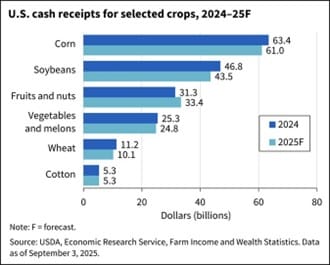
Moore began by providing details about the U.S. agricultural economy to date, stating that net farm income, as forecasted by the USDA, is expected to increase in 2025 due to livestock revenue and a sizeable increase in government assistance. It is forecast at $179.8 billion—$52 billion, or 40.7% higher than in 2024 (37.2% when adjusted for inflation). Government farm payments for the year are projected at $40.5 billion—a $30.4 billion increase from 2024. These direct government supplemental and ad hoc disaster assistance payments resulted from payments approved this summer in the American Relief Act of 2025 (H.R. 1, One Big Beautiful Bill). Total production expenses for farmers in 2025 are forecast to be $467.4 billion, an increase of $12 billion, or 2.6% from 2024. While government payments and production expenses increased in 2025, forecasted crop cash receipts are expected to decrease $6.1 billion or 2.5% compared to 2024. Cash receipts were largely lower due to price declines across most crops (fruits and nuts were exceptions) relative to 2024. Combined receipts for corn, soybeans and wheat are forecast to fall $6.8 billion in total (see Figure 1).
Statistics recently conducted via a survey by NAAA have provided details about the state of the agricultural aviation economy for 2025. The average number of aircraft in use per operation this year was 2.99%, up 2.4% from 2.9 aircraft per operation in 2024. The 10-year average is 2.3 aircraft per operation. In 2025, each operation treated an average of 115,885 acres, compared to 135,587 acres in 2024—a decline of 17%. Fixed-wing aircraft were used in 88% of the operations; helicopters in 16%, and UAS in 13% of operations—up from 5% of operations using UAS in 2024—a 160% increase. Twenty-nine point three percent (29.3%) of participating operators flew either significantly greater (9.5%), or somewhat greater acres (19.8%) in 2025 versus 2024; 21.6% of operators flew about the same number of acres in 2025 versus 2024; and 49.1% of operators surveyed flew either somewhat fewer (22.4%) or significantly fewer (26.7%) acres compared to 2024 where 44.2% flew fewer total acres. In terms of agricultural aviation operators’ outlook towards the 2025 season, 32.3% were optimistic about how the 2026 aerial application season; 27.2% had a neutral outlook about the 2026 season; and 40.6% had a negative outlook about the 2026 season, whereas 25% of operators surveyed in 2024 had a negative outlook about the upcoming 2025 survey. The 2025 survey had a 13.5% completion rate to date compared to a 19.6% completion rate in 2024 and a 17.9% completion rate in 2023. These numbers were as of September 26, 2025, and the survey remains open for respondents until Sunday, October 19. If you’re an operator and haven’t completed the survey, please do so via the Survey Monkey link that you received. An article detailing survey results will appear in the Winter 2026 issue of Agricultural Aviation magazine.
Then referenced was a Farm Journal article published in September regarding a survey of corn growers across the U.S. to identify their outlook about the agricultural economy, where 76% are very to moderately concerned about it. As such, they are planning changes for the 2026 season where 58% are postponing equipment purchases; 38% are reducing fertilizer applications; 11% are reducing chemical applications; and 6% are reducing the acres farmed. Moore then turned to agricultural trade and its impact on the U.S. agricultural economy. The USDA recently projected that the ag trade deficit for 2026 will be $41.5 billion. The good news is that it is lower than the $47 billion U.S. trade deficit projected for 2025. Unfortunately, a sizeable share of the deficit is due to markedly declining U.S. agricultural exports to China. According to the U.S. Department of Commerce, the U.S. exported just $5.5 billion worth of farm goods to China in the first six months of 2025, compared to $11.8 billion at the same point last year. China is basically out of the U.S. soybean market. In 2021, just a short four years ago, the U.S. had an agricultural surplus of over $6 billion, whereas in 2022, 2023, and 2024 it ran a deficit of $2.6 billion, $20.9 billion, and $36.5 billion, respectively. The growing U.S. agricultural trade deficit stems from an anemic attempt by the Biden administration and a lack of success to date by the Trump administration in implementing tariffs on several other countries, coupled with the U.S. currently making no effort to enter into any free trade agreements with other countries. This puts the U.S. in a clear minority globally. A final determination of whether the attempt to use tariffs to improve trading terms with our trading partner countries is legal is now with the Supreme Court. In late August, a 7-4 decision from the U.S. Court of Appeals for the Federal Circuit in Washington, D.C. ruled that U.S. tariffs were illegal, stating that Congress never delegated the power to impose tariffs through the International Emergency Economic Powers Act of 1977. The Trump Administration has appealed the case and the Supreme Court has fast-tracked their decision with arguments scheduled early in November.
Public Policy Issues Affecting Aerial Application
Moore then shifted gears to discuss public policy issues, starting with how the Make America Healthy Again (MAHA) movement put American agriculture on the defensive earlier this year when the Administration’s initial May 2025 MAHA report on children’s well-being, headed by U.S. Health and Human Services (HHS) Secretary Robert F. Kennedy, Jr. The report claimed pesticide companies’ studies are biased and called for more government (non-industry) funded research. Many claims in the report were correlative in nature rather than causative, or were tangential, equivocal or seriously antiquated (one 1982 insecticide study on breast milk was referenced despite the chemical having been banned for over 40 years). Another study was referenced in the report that was thrown out in the past by a U.S. District Court judge due to it being “junk science.” American Farm Bureau Federation President Zippy Duvall commented about the MAHA report that “(I)t is deeply troubling for the White House to endorse a report that sows seeds of doubt and fear about our food system and farming practices, then attempts to celebrate farmers and the critical role they play in producing the safest food supply in the world.”
The ag industry, including NAAA, effectively reacted to the MAHA initial report and its authors. NAAA participated in a field day with other ag groups, and drift reduction technology equipment manufacturers for EPA, USDA, the White House, and HHS Secretary Kennedy’s Senior Advisor Calley Means. The field day informed them about application equipment’s efficacy in making targeted and judicious pesticide applications. Helicopters Applicators Inc., out of Gettysburg, Pennsylvania, was very helpful in exhibiting their ag helicopter at the event and making aerial applications for the attendees. NAAA also separately met with members of the MAHA Committee, including senior HHS advisors and White House senior ag advisors to promote precision ag technologies commonly used to ensure targeted applications and prescribed doses. Efforts were successful, and the Final MAHA report, released in early September, lowered the volume about the health effects of certain pesticides. Rather, it promoted precision ag technology, research at USDA and EPA “to decrease pesticide volumes, improve soil health, and have a significant financial benefit for growers.”
Concerns still exist about the questionable science and demagoguery used by the MAHA movement about the food supply. In a few Southeastern states, legislation was just a hair’s breadth away from being enacted that would have resulted in requiring labeling on food products that used the herbicides atrazine and glyphosate to raise crops used in those food products.
Continuing with pesticide issues, Moore informed the audience about NAAA’s ongoing efforts to register pesticides for aerial use. Federal law requires pesticides to be reevaluated for safety every 15 years before they may be reregistered. NAAA informs EPA and the chemical companies about its aerial surveys and versions of atmospheric drift models that take into account common usage of drift reduction technologies that have preserved aerial use language on labels. Since 2017, NAAA has commented on nearly 300 EPA pesticide evaluations supporting aerial use. To further facilitate these aerial (re)registrations, NAAA conducts a comprehensive industry census and survey roughly twice a decade. The association has entered a contract with the reputable agricultural data and analytics company Kynetec to complete its aerial application pesticide use survey for this 2025 season. The survey will be sent to part 137 manned and unmanned operations. The results of these surveys are instrumental in providing actual aerial application data to EPA and the chemical companies to facilitate aerial use on pesticide labels. Another ongoing NAAA effort to help facilitate the registration of pesticides for aerial use is raising resources to recode the AGDISP atmospheric drift model that EPA uses to estimate risk from aerial drift. Updating the antiquated code of the current model will help better determine the effectiveness of drift reduction technologies (DRTs). As such, it could result in a greater inventory of pesticides being available for aerial applicators that use these proven DRTs and/or more label language flexibility. To date $375,000 has been raised due to donations from the Centers of Disease Control via the American Mosquito Control Association, the cotton and corn growers’ associations, NAAREF and funds directed to NAAA from a spray drone organization. Another $225,000 needs to be raised. The recoding is expected to be completed by 2027. NAAA also continues to meet directly with pesticide manufacturers to help ensure pesticides are registered for aerial use. This past year it has met with FMC and Corteva at those two companies’ headquarters.
Next presented was the recently released, deleterious proposed rule FAA published, allowing drones to operate beyond visual line of site (BVLOS) and NAAA’s efforts to alter the proposal to better ensure the safety of manned ag aircraft. The proposed rule would give drones the right-of-way over all aircraft unless the other aircraft is broadcasting its presence via ADS-B technology or via electronic conspicuity (EC)—a lower-powered and anonymous form of ADS-B that has yet to be approved in the United States. The most onerous part of the rule is the establishment of what FAA deems a shielded area—a 50-foot bubble around powerlines, substations, railroad tracks, bridges, pipelines, etc.—wherein UAS do not have to yield right-of-way to any manned aircraft, regardless of whether or not that aircraft is equipped with ADS-B or EC. The FAA stated in the proposed rule that there is a low collision risk between drones and an ag aircraft operating in shielded areas. NAAA’s submitted comments to the agency about the rule use FAA’s own data to show an extremely active low-altitude, unrestricted airspace of ag aircraft operations ripe for aircraft conflict between drones if the rule is promulgated as proposed. NAAA’s comments underscore that without FAA-certificated detect and avoid (DAA) technology equipped on both manned and unmanned aircraft, a conflict between the two is highly likely due to the difficulty manned aircraft have in sighting drones. NAAA has also undergone an active campaign in soliciting comments from the federal government, such as Congress, EPA, USDA and the Small Business Administration’s Office of Advocacy, and general aviation, agricultural and spray drone organizations to underscore the risk to needed aerial application operations should the shielded area language go forward as currently proposed. NAAA was successful last year in enacting statutory language in the FAA Reauthorization bill that directed FAA to ensure the safety of manned aircraft when drafting its BVLOS rule, which at this stage has been ignored.
Moore stated that NAAA is in a holding pattern awaiting the following two rules to be released, which has advocated that the rules provide safety for ag pilots and a less restricted regulatory environment:
- The FAA’s proposal requires the marking and logging of proposed and existing meteorological towers (METs) between 50-200 feet. NAAA advocated during the comment period to include the logging and marking of existing METs, as well as the logging and marking of other towers, such as communication towers, as required in the statute.
- The Federal Motor Carrier Administration’s proposal to allow for the transport of up to 1,000 gallons of Jet A without having a restricted CDL hazardous material endorsement for ag aviation Class A CDL drivers.
NAAA has also officially petitioned the FCC to list agricultural aviation operations in its code of federal regulations as an approved entity to broadcast on aviation radio frequency 122.925, or another designated frequency deemed appropriate by the commission. Last year, the FAA informed NAAA that agricultural aviation operations could use the frequency and to formally petition the FCC to make it official.
Communications & Public Relations
NAAA communications and public relations activities were discussed next. NAAA has issued multiple press releases to national media outlets this year that have been heavily circulated. The topics ranged from ensuring drone interests are aware of manned ag aircraft and yield to them; documenting that even late fungicide aerial applications to tar spot can preserve crop yields; promoting aerial cover crop applications to maximize their effectiveness; and success in gaining the recoding resources for the AGDISP modernization project. The releases were covered in heavily circulated agricultural publications ranging CropLife News, Agri-Marketing, Farm Journal and RFD-TV—that average 500,000 viewers per week. Combining circulation of all these entities reach hundreds of thousands of farmers, ag retailers, crop consultants and other purchasers of aerial application equipment.
Other communications endeavors included the field day with government and legislative staff, in addition to trade press. Fewer of NAAA’s communications resources this year have been spent on industry advertising and more have been directed towards the important industry pesticide use survey due to its importance in preserving these tools for aerial use. NAAA has continued its nearly daily campaign in promoting the industry on social media which continues to yield impressive results. Followers of NAAA’s Facebook page now number over 14,700; 960 X (Twitter) followers; and 2,100 Instagram followers—an important site to reach due to the fact that 62% of their users are under the age of 35. NAAA also has a LinkedIn page. The importance of social media continues to grow. According to the Pew Research Center 54% of Americans get their news from social media. Moore also introduced some exciting NAAA internal communications news—the new NAAA 365 app. The app is downloadable for both Android and Apple products. It will be the app to use for all convention programming information but also will eventually be as robust with information, similar to the NAAA website.
Education & Safety
Moore provided an overview of education and safety programs. The upcoming 2025-2026 PAASS season starts this month, which is the 28th year of the lifesaving, awarded program. The aviation safety portion of the program will go over weight and balance, center of gravity, density altitude and other physical factors that have an effect on the performance of an aircraft and how to configure and operate ag aircraft to optimize safety. The environmental professionalism portion of the program will focus on new compliance requirements to protect endangered species when operating next to field borders. Additional educational videos will be made available soon on the NAAA website’s Education Center and for the 2026 professional aerial application certification, C-PAASS. The additional programming will focus on operational security and understanding and properly configuring an ag aircraft’s weight and balance. Another new safety product developed by the NAAA this year is a Flight Risk Assessment Tool (FRAT) that can be used by any ag pilot to evaluate the risks they face before they throttle up the ag aircraft to better ensure their safety.
NAAA’s sister organization NAAREF accomplished another ag aviation safety feat earlier this year. In 2014, the NTSB issued a Special Investigative Report (SIR) on the ag aviation industry that included direct recommendations ranging from addressing fatigue and maintenance issues to improving ag pilots’ knowledge and skills curriculum. Thanks to NAAREF’s completion of its Ag Airman Guidelines —a listing of instruction on 12 areas of operating in the ag aviation environment—from preflight to postflight—coupled with the growing amount of content on the website’s Education Center—resulted in satisfying the knowledge and skills recommendations of the NTSB SIR. Now all the recommendations have been addressed to the satisfaction of the NTSB.
Regarding accidents, to date, there have been 40 total ag aviation accidents in 2025 and four fatal accidents. If these statistics stand for the remainder of the year, it will be the lowest number of total accidents on record for the industry and tied with 2012 for the lowest number of fatal accidents. Even though preliminary statistics show the industry down 17% in the average number of acres treated per operation in 2025, total ag aviation accidents have dropped 35% and fatal ag aviation accidents have dropped 225% compared to 2024.
Ag Aviation Expo
The exciting events scheduled for the upcoming convention in Reno, starting on November 15th and ending November 19th, were then discussed. The Kickoff Breakfast speaker will be Ray Starling, former White House agricultural advisor for President Trump during his first term, and chief of staff to former USDA Secretary Sonny Perdue. He is also the author of Farmers vs. Foodies, a book about who will win today’s food policy debate, activists or agriculture. The session will focus on the state of the agricultural economy with known agricultural economist Allan Gray of the Purdue Center for Food and Agricultural Business speaking, followed by a panel of corporate allied NAAA leaders in ag aviation space. Over 25 educational sessions will be held including, on Saturday, the wire safety course and turning an ag aircraft safely course, led by ag flying school veteran Fran de Kock. These sessions are free to those that pre-register thanks to the generosity of the Tylor Johnson Memorial Foundation. Nearly two dozen states are offering CEUs and six aircraft and nearly 140 aerial application companies will be exhibiting. The convention auction will again have a Pratt & Whitney Canada, PT6A-34 turbine engine. It also will include an Air Tractor golf cart, a Turbine Conversions single point fueling system, an Aero Flow boom system, and much, much more. Moore urged the audience to pre-register by Oct. 17, 2025, to save $75. He stated that the 2026 convention will be in Savannah followed by Oklahoma City in 2027 and back to Reno in 2028.
Association Financials
Moore discussed NAAA’s finances stating that NAAA completed its 2024-2025 fiscal year, June 30th, with a restricted surplus of $98,184 thanks primarily to having a strong convention auction, again due to the generous donation of a Pratt & Whitney Canada turbine ag engine, a strong convention in Fort Worth, and strong gains on its investments. It ended the fiscal year with $5,039,047 in total assets. NAAA spends $1,997.23 per member based on its $2,720,222 in expenses and 1,362 total current members. Member dues account for 29.6% of total expenses. Membership dues cost $1.95 per day for operators, and $0.96 per day for pilots. NAAREF ended its 2024-2025 fiscal year with a restricted surplus of $37,766 and $1,297,872 in assets.
Membership
In terms of membership as of the end of September 2025, NAAA had 452 operators, 400 pilots and 1,391 total members compared to 530 operators, 592 pilots and 1,847 total members as of the end of 2024. There is a precedent for an increase in membership shortly before convention as attendees receive a lower price for belonging to NAAA. There are a total of 1,560 manned aerial application operators, 2,028 non-operator manned ag pilots and 1,082 registered part 137 drone operators in the U.S.
Moore offered ideas that would likely augment NAAA membership, such as insurance underwriters and pesticide manufacturers offering premium discounts and label flexibility, respectively, for C-PAASS participation. Also, the NAAA insurance health care provider, Decisely, stated that if the Affordable Care Act tax credits expire, which they are currently expected to do in December and is a reason an agreement can’t be reached to currently fund the government, then Decisely’s premiums will be much more competitive for ag pilots and operators. Smaller operators and drone operations might also be more likely to join if NAAA membership rates were scaled by total hopper capacity for an operation rather than by number of aircraft.
Forecast
Moore concluded with forecasting/economic data, starting with CropLife magazine’s 2025 national survey of agricultural retailers and cooperatives conducted this summer. The graph showed a decrease in custom application services this year compared to 2024. For example, 86% of those surveyed in 2024 provided variable rate technology (VRT) fertilizer applications versus 84% this year; 43% of those surveyed in 2024 provided VRT custom pesticide applications versus 40% this year; and 35% of those surveyed in 2024 applied crop inputs with a drone versus 27% this year—a drop in applications in all three categories in a year’s time.
Moore also referenced a recent survey this summer that showed that volume sales for organic produce grew 5.6% to 4.1 billion pounds over the past year versus a 3.6% growth for conventional produce. The survey showed that one in three Gen Z (b. 1997-2012) and Millennial (b. 1981-1996) shoppers more frequently buy organic produce than older generations; and 17% of Gen Z and 14% of millennials indicated they would be willing to pay 25% to 49% more for organic, compared with just 3% of Gen X (b. 1965-1980) and 7% of baby boomers (b. 1946-1964).
In concluding his report, Moore stated that although some of the economic data presented was not all rosy, he quoted Winston Churchill be stating “For myself I am an optimist—it does not seem to be much use to be anything else.”
Committee Reports
At the conclusion of Moore’s presentation, President Rivenbark adjourned the Board for NAAA and NAAREF committees to meet to conduct business. The Board convened on the afternoon of Saturday, October 11th, and presented an overview of its discussions and motions. The highlights are as follows:
Allied/Convention Committee: The committee discussed the possibility of hosting the Ag Aviation Expo in conjunction with the Agricultural Retailers Association in the future. The next available year in which NAAA has not yet booked a convention site is 2029. It expects to have a contract from the Savannah Convention and Visitors Bureau by February of 2026 to consider.
Awards Committee: The committee announced the following slate of 2025 award winners, who will be honored at the Excellence in Ag Aviation Banquet on Wednesday, Nov. 19, 2025, in Reno, Nevada:
- Agrinaut Award: Matt Hovdenes
- Delta Air Lines “Puffer” Award: Bradley Reed
- John Robert Horne Memorial Award: Hugh Cundiff
- Larsen-Miller Community Service Award: Seth Olivier and Billy Whitfield
- Opal & Bill Binnion Memorial Award: Toby McPherson
- William O. Marsh Safety Award: Randy Hale
- Richard “Dick” Reade Memorial Allied Award: Tim Bonnell, Jr. and Richard Packer, Sr. (posthumous)
- Evans-Christopher Operation S.A.F.E. Award: Kim Pope Brown
Awardee tributes will appear in the Winter 2026 Agricultural Aviation magazine.
Budget and Finance Committee: The committee brought two motions to the board, both of which were approved. The first was to approve the annual audit of the 2024-2025 fiscal year. The second, brought forth from the Precision Agriculture Committee, to allocate $100,000 to NAAREF, if needed, to fund the recoding of the AGDISP model to enable it to test the efficacy of new drift reduction technologies and techniques so modeled and to aid in facilitating real-time, site-specific risk assessments.
Communications Committee: The committee announced that next year the magazine will feature stories on the association’s 60th anniversary, covering its work on behalf of the industry during that time. On a related topic, it announced that AgAir Update magazine will be including chapters from NAAA’s 100th anniversary book, “Agriculture’s Air Force 100 years of Aerial Application,” in forthcoming issues. It also announced that the Syngenta/NAAA leadership training program will have a new class of 14 prospective leaders from the states undergoing the training in the upcoming winter at two different leadership training events in Washington, DC. One will be held at the February board meeting. The committee also announced that the association will start sending its eNewsletter to the FAA’s different Flight Standards District Office (FSDO’s). Also, with the website and the new NAAA app becoming more and more robust, easily searchable, and formattable, next year (2026) will be the final year of the bound, hardcopy version of the membership directory.
Government Documents/Long Range Planning Committee: The committee discussed a change to the Bylaws that would provide the Nominating Committee flexibility in choosing the association’s president and vice president by relaxing the requirement that the offices’ incumbents be an operator. Work is being conducted to flesh out potential language. In addition, a four-person committee was established to update the NAAA strategic plan to ensure, amongst other items, consideration of new application technologies. The document was last updated in 2013.
Government Relations Committee: In addition to the topics discussed above, a concern was raised by EPA’s non-wind directional aquatic buffers for pesticide labels, particularly since they precede recent agency endangered species strategies that use Tier 3 in AgDRIFT and recognize that drift reduction buffers should be based on wind direction. NAAA is working with EPA to have the same, shorter aquatic buffer distances as ground rigs for runoff and erosion protection and that they be wind-directional.
Insurance: The committee discussed work underway to provide C-PAASS credit toward the FAA’s Wings program. It also discussed the new drift tracer product that applicators can use in their hopper mixes which could acquit (or implicate) an operator using them in the event of a drift claim. Aanika, the manufacturer of the drift tracer, will have a booth at the Ag Aviation Expo.
Membership: The committee announced its BASF, Thrush and Turbine Conversions Ag Wings of Tomorrow’s scholarship winners that will go to help individuals train to become ag pilots. They are Braxon Blackwood (sponsored by Mike Woodruff, Satana, KS), William Moore (sponsored by Al Schiffer, Ovid, MI), Hunter Vaughn (sponsored by Alan Jones, Biggs, CA), Nolan Boehr (sponsored by Mike Rivenbark, Clinton, NC), and Gregory Randolph (sponsored by Allison Johnson, Cozad, NE). The Turbines Inc. Charles Stokes Memorial Scholarship winners aiding pilots in transitioning to turbine engines are Skyler Frazer (sponsored by Wren Johannaber, Moberly, MO) and Tommy Koebel (sponsored by Cameron Hendrickson, Rochelle, IL).
The committee also brought to the board honorary memberships that were approved to Wayne and Lou Slaughter from North Carolina (1996 NAAA and 1997 WNAAA presidents, respectively) and Bob Bailey of Texas, 2008 NAAA president and long-time and current Convention Committee co-chair.
Museum Committee: The Last Pass Memorial Walk outside the National Agricultural Aviation Museum was discussed and members were encouraged to join the museum and contribute. To do so, go here. Graham Lavender, Matt Woolard, and Glenn Holloway were acknowledged for their many contributions in bringing the Last Pass Memorial Walk into existence.
Nominating Committee: The committee announced the following slate of NAAA officers for 2026: Tim Tyree of Kansas for secretary, Tim Swanson of Michigan for treasurer, Joel Meyer of Iowa for vice president, and Matt Woolard of Arkansas for president. Officer elections will take place at the NAAA Board Meeting in November in Reno, Nevada.
Precision Agriculture Committee: The committee discussed several interesting research projects highlighting cutting-edge aerial application technology such as using combined GPS flow control units with precision boom systems that have resulted in precise autonomous aerial applications. Testing is underway to test the efficacy of these autonomous applications on field edges and crosswinds. A USDA-ARS Aerial Application Technology Unit report was given discussing a cooperative effort with Purdue University on comparing drone and ground rig deposition. It was found that drones can achieve similar deposition and coverage to ground rigs but they need higher application rates to do so. The unit is also coordinating a collection of data for a series of drone drift trials. The data will be used for future AGDISP development efforts. In addition, atomization results from wind tunnel measurements of two new nozzles and three existing nozzles have been accumulated and will be added to the ARS’s spray nozzle models.
Safety & Federal Aviation Regulations Committee: The committee discussed the newly surfaced maintenance and inspection requirements for large ag aircraft. Essentially, operators of fixed-wing aircraft with a maximum gross weight above 12,500 pounds must follow the aircraft manufacturer’s maintenance regime, rather than simply doing an annual. This affects the AT-802 and Thrush 710 aircraft.
At this year’s Expo, the FAA will lead panelist discussions and conduct interviews on cockpit distractions. NAAA is seeking approximately 30 attendees to participate. The outcome will be an FAA report, which will also provide data to use across the NAAA/NAAREF education portfolio.
Support Committee: Chairwoman Tiffany Rivenbark informed the board that the 2025-2026 Athena program that will be presented at the Ag Aviation Expo and state/regional conventions is “Spin for a Season of Success,” featuring a wheel for attendees and presenters to spin, on ag aviation operation safety topics, that will then be discussed. The Support Committee’s Monday event will be a food and wine pairing at the Atlantis. The committee also named its scholarship winner, Cole Woolard of Arkansas, who will receive the $3,000 scholarship and be recognized at the Excellence in Ag Aviation Banquet in Reno on Wednesday, Nov. 19, 2025.
UAAS Committee: The committee discussed the recent FAA BVLOS proposed rule in detail, particularly the shielded area proposal that provides no right-of-way for an aircraft regardless of ADS-B equipage when a drone is operating within a 50-foot bubble of utility lines, railroad tracks and similar areas. The committee discussed the idea of operators sending a letter to owners of shielded areas land to let them know where and when they operate within the shielded areas. An ad hoc committee was developed to discuss working with the FAA for an Advisory Circular or guidance on how best to facilitate understanding between shielded area land owners, shielded area drone operations and manned aircraft for collision avoidance purposes.
A report on the Unmanned Aerial Pesticide Application System Task Forces was given about good laboratory practices’ drift trials done with spray drones and sent to several government agencies globally. The studies are for very specific regulatory purposes. The task force is working on a summary report of the drift studies for public sharing. They are gearing up to conduct a comprehensive operator survey focused in the U.S. and have collaborated with NAAA to obtain a list of drone operators. The survey is designed to find out details about occupational specifics of drone operations. CropLife America is launching a webinar series to initiate work on label development tailored specifically for drones. An American Spray Drone Coalition (ASDC) report was delivered stating that in 2024, only 14% of drones sold were registered. Nine thousand (9,000) ag drones were sold last year, and only 1,200 were registered. A discussion was also centered around the ASDC’s mission once achievement of a robust domestic spray drone manufacturing industry is achieved and its spray drone members coming under the aviation safety and environmental stewardship programs of the NAAA.
National Agricultural Aviation Research and Educational Foundation: In addition to a review of the upcoming PAASS program and other NAAREF safety programs, future curriculum and funding for the programs were also discussed in detail. Ray Newcomb, NAAREF board member, was acknowledged for distributing his company’s accident response checklist for the board to review and such a checklist will be shared on NAAA’s website and as possible future NAAREF curriculum.
State and Regional Reports:
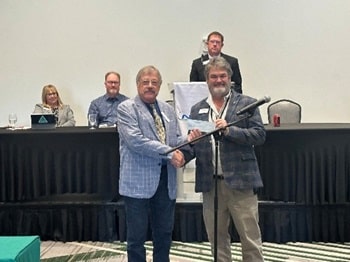
- NAAREF President Rod Thomas was generously presented with a check for NAAREF from the Mississippi Agricultural Aviation Association for $2,500.
- Brenda Watts (guest and 2016 NAAA President) announced that the Ag Aviation Golf Tournament will take place October 18-19, 2025, and proceeds will go to the Last Pass Memorial Walkway and the Scott Rainey scholarship fund. For more information, go here.
It was a productive four days of training and committee and board meetings. It was also a somber, yet meaningful, official opening of the Last Pass Memorial Walk. NAAA and NAAREF offers its deepest thanks to its own volunteers, the staff and volunteers of the Mississippi Agriculture and Forestry Museum, and to its Foundation and Kimmel Aviation Insurance for sponsoring receptions at the meetings that established camaraderie and a great working environment for all.