

NAAA Cautions Hobbyist and Professional Drone Operators Not to Interfere with Low-Altitude Manned Agricultural Aircraft This Growing Season
With another growing season getting underway at a time when aerial application services are expected to be in high demand, on Tuesday, NAAA sent a news release to aviation and agricultural media outlets advising uncrewed aircraft system (UAS) operators to be mindful of low-flying manned agricultural aircraft operations. NAAA has several prospective interviews with major media establishments over the next week to discuss this topic on their widely circulated mediums.
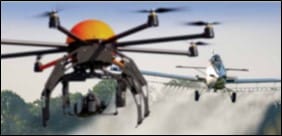
The press release recommends that uncrewed aircraft operators:
- Give the right of way to a manned aircraft. It’s the law.
- Equip drones with visible strobe lights, highly visible markings and tracking technology, like an ADS-B In system.
- Be certified and well-trained in operating an uncrewed aircraft.
- Contact local agricultural aviation operations before flying by consulting the Find An Aerial Applicator database.
- Land your uncrewed aircraft immediately when a low-flying aircraft is nearby.
- Carry uncrewed aircraft liability insurance.
“With the growing number of drones over the last few years, it is critical for their operators to be aware of low-flying, manned agricultural aircraft,” Moore said in the news release. “It is extremely difficult, if not impossible, for manned aircraft to see a drone while conducting crop-enhancing and other aerial applications 10 feet off the ground at speeds as fast as 140 mph. We encourage professional and hobbyist drone operators to keep this in mind to ensure a safe 2024 growing season.”
The Federal Aviation Administration (FAA) is reminding UAS users to keep safety in mind during their annual Drone Safety Day on Saturday, April 27. According to the FAA, “Drones are the fastest-growing segment of aviation in the U.S. As of October, there are nearly 864,000 drones registered with the FAA, and over 330,000 certified Remote Pilots. These numbers are projected to continue to grow.”
This is the eighth year NAAA has reached out to the media regarding safe drone operations heading into the spring growing season.