

NAAA Press Release on Cover Crops Garners Media Coverage; Cover Crops Press Release Template Available for Members to Send to Local Media
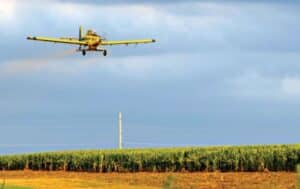
Earlier this week, NAAA sent a press release about ag pilots working to seed cover crops to national agriculture and aviation media contacts. In just the first few days, the press release has been picked up by RFD-TV and CropLife Magazine’s eNewsletter. CropLife Magazine’s eNewsletter is read by 23,000+ subscribers.
RFD-TV’s Tammi Arender interviewed NAAA CEO Andrew Moore yesterday in a segment for Market Day Report. Moore discussed the environmental benefits of applying cover crop seeds to soil health and listed the benefits of aerially seeding to augment those benefits. Moore stated how important this is on the eve of the release of the Make America Healthy Again (MAHA) strategies and reforms to Americans’ health, which is expected to include the importance of soil health. Market Day Report impressions average 500,000 people per week and is one of RFD-TV’s top-watched shows. RFD-TV is the #1 cable network for farmers & ranchers.
In addition to NAAA sending a press release to media, we recommend that you also send a press release to your local media if you’re seeding cover crops. NAAA has prepared a cover crops sample press release (this link will open a Word document) that you can personalize to your own aerial application business and send to your local media outlets. The press release serves the purpose of alerting the public that they may still see and hear your ag plane working. It also educates the public on the great conservation practice of seeding cover crops. A direct link to the press release is here, or you can access it through the Media Kit link on the NAAA website.
Growing cover crops also increases soil carbon sequestration, which involves removing and storing carbon dioxide from the atmosphere. Aerial applicators seed 3.8 million acres of cover crops annually, which means they are responsible for helping to sequester 1.9 million metric tons of CO2 equivalent annually. According to the EPA, this would be the equivalent of removing approximately 412,000 cars with carbon-combustion engines from the roads each year.