

New Anti-Disorientation Technology Could Benefit Ag Pilots in the Future
Spatial disorientation continues to be a major concern in aviation safety, responsible for 5% to 10% of general aviation accidents, and tragically, 90% of those incidents are fatal, according to the Federal Aviation Administration (FAA). Even seasoned pilots can fall victim when the body’s equilibrium and visual cues are in conflict.
For ag pilots, the risk of disorientation may not be as pronounced during typical daytime spraying operations, but low-altitude flying, busy schedules, fatigue and sudden weather shifts can all compound the danger, especially in marginal conditions.
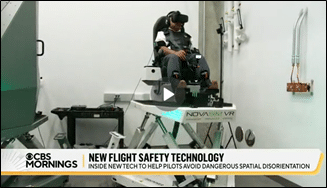
The CBS Morning News recently reported on new research at the University of Maryland that may offer a promising advancement to help address this hazard. A team of engineers and aviation specialists is developing wearable technology that could help prevent spatial disorientation through the use of vibrations.
Similar in concept to the lane departure warning systems in cars, the prototype flight suit would deliver subtle vibrations to inform a pilot if the aircraft is banking, climbing or descending unexpectedly. By adding vibration alongside visual instruments and the body’s natural equilibrium, this system aims to guide pilots back to proper orientation when traditional senses become unreliable.
Helicopter pilot and aerospace engineering professor Anubhav Datta, along with professor Umberto Saetti, is leading the University of Maryland research project. They’re designing the system to work either as part of a flight suit or integrated into a pilot’s seat. Early testing shows promise in helping pilots ‘feel’ their orientation, especially in low-visibility conditions.
While this technology is still in development, the implications for agricultural aviation are worth watching. Ag pilots often operate in unique and demanding environments, and while they’re trained for visual flying in daylight, situations like sudden weather deterioration, obstruction avoidance, or transitioning between topography could present opportunities where additional sensory feedback could enhance safety.
The technology will need to be approved by the FAA. Read the article.