

Remote Identification Required for all Uncrewed Aircraft Starting Saturday, March 16, 2024
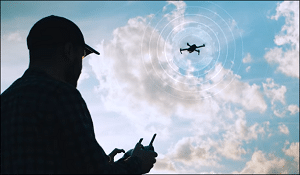
The FAA’s policy for exercising discretion in determining whether to take enforcement action for drone operators who were not able to comply with the Remote ID Rule ends on March 16, 2024. Operators who do not comply after that date could face fines and suspension or revocation of their drone pilot certificates. Remote ID applies to drones which are required to be registered or have been registered with the FAA, including those flown for recreation, business, or public safety, and drones that are foreign-registered. All drones operated under 14 CFR Part 107 must be registered. Recreational aircraft weighing more than .55 pound (250 grams) must also be registered.
Remote ID is necessary to ensure the safety and security of the national airspace system by distinguishing compliant airspace users from those potentially posing a safety or security risk. Remote ID also helps to lay the foundation for routine advanced operations such as package delivery and flying beyond visual line of sight.
There are three ways to comply with Remote ID:
- Operate a Standard Remote ID Drone – a drone produced with built-in Remote ID broadcast capabilities; or
- Operate a Drone with a Remote ID Broadcast Module – a device with Remote ID broadcast capabilities that can be attached to a drone; or
- Operate at an FAA-Recognized Identification Area (FRIA) – areas where drones without Remote ID broadcast capabilities can operate.
To identify if a drone or broadcast module is Remote ID compliant:
- Go to the FAA UAS Declaration of Compliance website
- Click on “View Public DOC List”
- Filter by “RID” and “Accepted”
- Search for your drone or broadcast module
If your FAA-registered drone or broadcast module broadcasts Remote ID, but is not on the Public DOC List it is not compliant. For questions contact the UAS Support Center or call us at 844-FLY-MY-UA (844-359-6982) or click here.