

NAAA Sends Press Release to Ag & Forestry Media Touting Positive Impact of Aerial Application on Spruce Budworm
On Tuesday, NAAA sent a press release to agricultural, firefighting, forestry and general news media across the United States touting the benefits of aerial application for Maine’s forests, which are under attack by spruce budworm (SBW). NAAA member and past president, Ray Newcomb of JBI Helicopter Services in Pembroke, NH, has been working with the Maine Budworm Response Coalition (MBRC) for several years to combat SBW outbreaks.
Leading the control efforts, JBI Helicopter Services treated 243,000 acres of Maine’s forests in 2025. To help, they brought in aircraft from Nebraska, Wisconsin, and Indiana. Eight airplanes treated 199,300 acres, and three helicopters treated the remaining 43,700 acres. JBI Helicopter Services is getting ready for more aerial applications to treat SBW hot spots in 2026, with plans to treat 60,000 acres. They will continue to be the application arm of the MBRC until this devastating insect pest is under control and an outbreak is no longer likely.
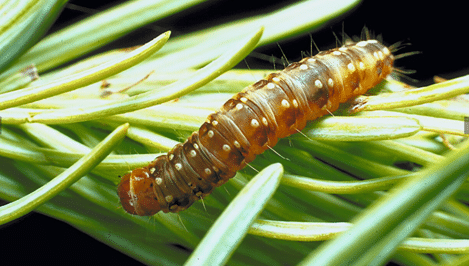
SBW is a native moth that is harmful during its larval stage. SBW is normally present in Maine’s forests, but roughly every 40 years, the population surges to a level that causes extensive damage and high mortality. The last massive outbreak of SBW in Maine occurred in the 1970s and 1980s, when almost seven million acres of spruce and fir were eliminated. The devastation impacted the local forest-based economy, diminished water quality, altered wildlife habitat, and reduced Maine’s air quality.
SBW also increases the risk of widespread forest fires and significantly impacts Canadian wildfires. The widespread tree mortality caused by SBW creates vast amounts of fuel that increases the severity and probability of wildfires. Smoke from the fires has triggered air quality alerts in Canada and the U.S. Read the press release.